



You may or may not have heard about this gardening “trend” where people are planting their tomato transplants on their sides or sinking them deep in the ground with several inches of the stem buried.

It may seem like an odd thing to do, but it’s quite beneficial for your tomato plants. It’s not any harder to do than planting the “normal” way, but it can gain your plants (and you) a lot.
Jump to:
Why Would You Plant Your Tomatoes on Their Side?

Planting tomatoes sideways serves mainly two purposes --
- It expands root volume and root surface (which in turn has benefits of its own), and
- It provides better anchoring for the tomato plant (instead of basically one point of attachment with the ground)
Sideways and Deep Planting Expand Tomato Root Area

When you plant tomatoes on their side or plant them deeply, all of the stem area that is buried in the ground will send out roots. Most plant stems rot if they’re too far in the ground, but tomatoes have cells in their epidermal layer that will turn into roots instead.
When you plant this way, what you are doing is expanding the surface area and volume of the roots.
- If you plant the transplant sideways, all the stem that is lying across and buried under the soil will grow more roots.
- When you plant sideways, you also extend the area underground that anchors the plant – so it’s not just a space straight down below the plant.
- If you plant the transplant deeply, the whole length of the buried stem under the ground will grow new roots instead of just sending down roots from the original root ball.
- Deep planting straight down provides better, deeper anchoring, too.
Tomatoes grow large, so there is a great benefit to having them anchored better underground. These plants will not be prone to pulling or lifting up in wind storms or in wet soil, a crucial feature in wet, rainy years.
There are benefits to plant growth and nutrition, too; the increased root surface:
- Increases reach and access to soil nutrients and, therefore, increases nutrient uptake
- Increases access to and uptake of water
- Supplies more hydration and nutrients to the plant and allows it to support more fruit, increasing fruit yield
- Enhances the health of the plant, which helps plants to be stronger, with better immune systems, and better able to fight off diseases
How to Plant Tomatoes Sideways
Here’s a run-down of how to plant your tomatoes sideways:
- Strip all the leaves off the bottom of the tomato stem

- Remove the leaves from any part of the stem that will be buried underground
- If the lowest leaves are touching the soil, remove them so you have at least two inches of stem to keep the lower leaves off the ground

- Make sure you leave enough leaves for the plant to photosynthesize and feed itself – at least two full sets of adult leaves, preferably three or more (depending on the height of the tomato plant)
- Now, dig a sideways trench that angles down into the ground
- Place the tomato stem and root ball into the hole, leaving the leafed section above the ground

- Fill in the hole and tamp the soil down

- Gently bend the above-ground part of the plant up so it stands mostly straight. Don’t bend enough to break the stem.

- Don’t worry if the plant isn’t standing straight up at first; it will straighten as it grows, just like a “normally” planted tomato plant. Whatever you are using as a support will help to train the plant, too.
How to Deep-Plant Tomatoes
If you choose to plant your tomatoes deeply, straight down, here is how it’s done:
- Strip all the lower leaves from the section of stem that you will plant under the ground
- Leave enough stem so that the bottom leaves will not be laying on the soil after they are planted
- Make sure the plant has at least two sets of leaves to perform photosynthesis
- Dig a hole deep enough to accommodate the root ball and the length of the stem that you plan to bury
- Set the plant in the hole
- Keep the plant high enough so the lowest leaves are off the ground
- Backfill the soil until it is even with the ground
- Tamp down the soil around the tomato plant
Set Supports When You Plant your Tomatoes

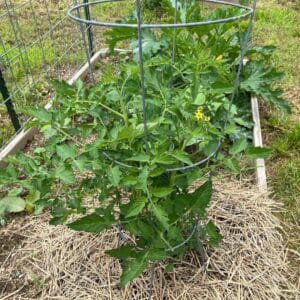
Regardless of which planting method you choose, set up your tomato plant supports when you plant the plants. If you wait to put in stakes, cages, or trellises later on, you risk doing a lot of damage to the plant’s roots – roots that you’ve taken extra steps to establish!

When you set your stakes, cages, or other supports when you plant the plant, you’ll also know where you just set the stems, and you won’t need to worry about severing, cutting, or piercing the underground stem and roots when you set them.
It’s wise to mulch when you plant tomatoes, too
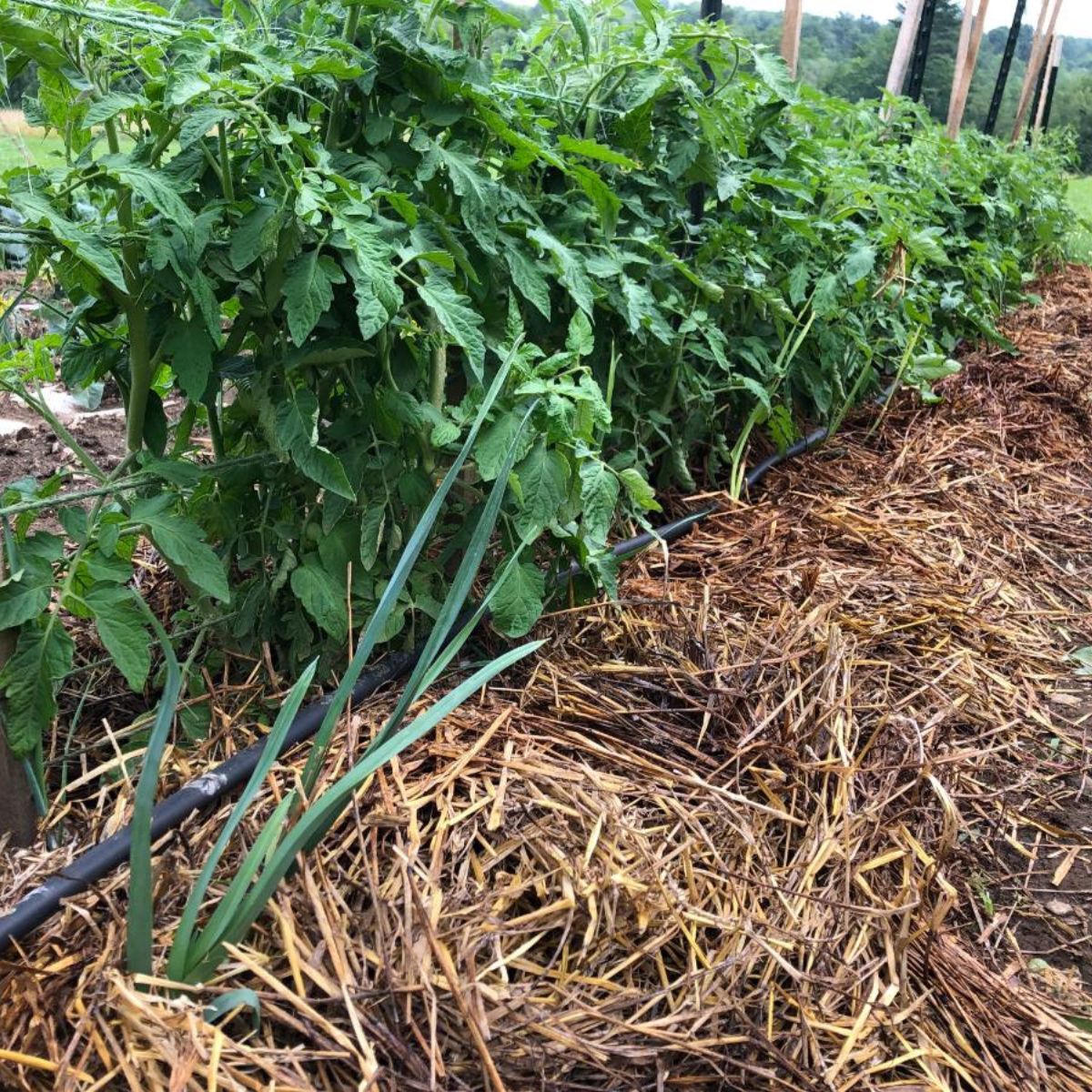
It is also smart to lay down some sort of mulch under your tomatoes and for an extended area of two feet or more around the plant.
Many of the worst diseases and blights that affect tomato plants are fungal diseases. These are most often soil-born, meaning that the fungal spores live in the soil, and they infect the tomatoes when the soil and spores splash up onto the low leaves and bottoms of the exposed stems.
If you lay mulch between the soil and the plant, it can’t splash up from watering or rain. This is simple disease prevention for your tomatoes!
Some good mulches you can use to help preserve soil moisture and control splash include:
- Straw
- Cardboard
- Newspaper
- Shredded paper
- Non-glossy packing paper
- Craft paper or weed blocker paper
- Landscape fabric (this is easier to apply before you plant and then cut planting holes through the fabric; same for plastic)
- Mulching plastic
- Shavings
A combination of a layer of paper and then straw works very well to protect your tomatoes from splashing soil.
Tips & Notes About Side and Deep Planting for Tomatoes

- Don't worry that you will cause stem rot planting this way – tomatoes have cells below the epidermal layer (called parenchyma cells) that are non-specific and will turn into roots when planted underground
- Sometimes, you will see these cells become almost worm-like bumps or growths on your tomato stems, and sometimes, they form into air roots above the ground. This is nothing to worry about and happens in moist years, humid weather, or in response to being close to moist ground and soil. Ignore them.
- Planting sideways does not cause the plants to grow crooked – the top will still reach and grow upwards, just like they would if you planted only to the top of the potting soil.
- Install whatever support system (stakes, cages, trellises, fences, etc.) that you plan to use when you plant the tomatoes. This way, you won’t accidentally stab or disturb roots after they grow. You will also have a better idea of where the roots are underground when you plant the stakes or support the plant.