


One of the more difficult things to decide when planting a tomato patch is how many tomato plants to grow.

How many tomatoes you should grow will depend on a few factors, but primarily, it depends on what you want to do with your tomatoes; how you want to use them.
Jump to:
- Number of Tomatoes for Fresh Eating
- Number of Tomatoes for Preserving for the Year
- Indeterminate or Determinate?
- VIDEO: How Many Tomato Plants to Grow Per Person
- Average Yields for Tomato Plants
- A Good Tomato Patch Plan for a Family of Four
- Space is a Determining Factor in the Number and Type of Tomatoes to Grow
- Other Tips to Maximize Tomato Space and Usage
- Explore Tomato Varieties for Different Uses
Number of Tomatoes for Fresh Eating

The figures given are per person. Multiply the number of people you are feeding by the recommended number of tomato plants.
- 1 to 3 tomato plants per person
Some sources list as many as 2 to 4 plants per person for fresh eating. These would generally be indeterminate varieties, and all the tomatoes won’t ripen at the same time. Two to four plants per person would be a high amount of consumption per family member.
You probably don’t need more than one or two plants per person unless you are eating tomatoes every day (and at that, you’d probably need to be eating several per day).
Keep in mind that if you are growing other types of tomatoes, they can be used for fresh eating purposes, too. That may help you reduce the number of tomato plants you need to grow and maintain.
Number of Tomatoes for Preserving for the Year

Again, these are the number of plant you need per person to get you through the year with your preserves. This number is in addition to the number of plants you use for fresh eating.
- 4 to 8 tomato plants per person
If you plan to do a high amount of canning or preserving, or if you want to do many different types of products, then plan towards the higher end of the spectrum. If you only want a bit of sauce or salsa for the year, the lower end will suffice.
Indeterminate or Determinate?

There are benefits to both determinate and indeterminate tomatoes. Most gardeners are happiest with some of each. Do put some thought into how you plan to use your tomatoes; this will help you decide if you should plant one type or another, or if you want that more flexible mix of both.
Here are some things to think about:
- For fresh eating, you most certainly want an indeterminate type of tomato. This is because you want smaller amounts of tomatoes on a regular, consistent basis for daily or weekly eating.
- If you want to do large preserving pushes (for example, taking a day and doing up a bog batch of sauce), then you will want determinate tomatoes so that you have a lot of tomatoes ready to work with at one time (which will really be more like a few times, but you’ll have the larger quantities to work with).
- If canning all at once is overwhelming, or doesn’t fit your time or schedule, plan for at least some (or all) indeterminate canners. Some good options are San Marzano, Amish Paste
- Indeterminate sauce, paste, and preserving tomatoes are also good if you want to do different types of canning or preserving. That way, you can work on different projects and not try to do four different things at once. For example, you might want to do some sun-dried tomatoes but also some salsa, sauce, soup base, tomato puree, juice, stewed, or diced tomatoes. For so many different preserving projects, it will be more manageable to work over a span of time, and not have to deal with everything basically all at once.
VIDEO: How Many Tomato Plants to Grow Per Person
Average Yields for Tomato Plants
The average yield per tomato plant is usually estimated at around 10 pounds per plant. Yields in the range of 10 to 15 pounds per plant are not uncommon.
Some plants can yield up to 20 pounds in optimal growing conditions.
You can use this as a guide to help you decide how many tomatoes you need to plant.
You may have to do some growing to determine what the yield you can get in your tomato garden will be over the course of your growing season.
Number of Pounds and Yields for Canning And Preserving

- 2 ½ to 3 ½ pounds per quart of canned tomatoes (such as whole or halved, stewed)
- 5 pounds per quart of sauce for a thin sauce
- 7 to 10 pounds per quart of sauce or puree for medium to thick sauces (depends on how much you cook the sauce down)
A Good Tomato Patch Plan for a Family of Four

As a starting point to help you get your tomato garden growing, here is an example of how many plants and what types to grow. As you go, take note and decide if you need to adjust up or down according to your needs in the future.
For a family of four, you should plan for a total of 18 to 24 plants. These should be mixed and matched types (determinate or indeterminate) and varieties so that you have enough to cover all your fresh eating and preserving needs.
Example Breakdown of a Family Tomato Garden for fresh eating, canning, and preserving (family of four):

- 1 or 2 cherry tomato varieties for salads and fresh eating (cherry tomatoes are indeterminate, so will produce for the whole season once they start)
- 4 to 6 Indeterminate variety plants of a fresh eating and slicing variety (a multi or dual-purpose type is a good choice; Rutgers or Comstock Sauce and Slice are two good options)
- 6 to 8 Indeterminate saucing and preserving tomato varieties
- 6 to 8 Determinate tomato varieties for canning, saucing, and preserving; these should preferably be a Roma, Italian, or saucing type so that they fit more than one type of preserving well; some good varieties to choose from include Amish Paste, Celebrity, Roma
An alternate plan for a tomato garden for a family of four:
- Grow all multi-purpose or dual-purpose tomato varieties
- Then, you can grow only one or two varieties, which may help purchasing and management, helping you to buy or grow from seed more efficiently and cost-effectively
- If you go this route, grow half determinate and half indeterminate, or 25% indeterminate and 75% determinate
- That will give you a steady supply of dual-purpose plants for fresh eating while also giving you large flushes for big saucing, canning, and preserving sessions
- Numbers for this plan would be as follows: 8 to 12 determinate and 8 to 12 indeterminate dual/multipurpose tomato varieties (divided 50/50 each type), or
- 4 to 6 indeterminate and 14 to 18 determinate tomato plants (divided 25/75 each type)
Space is a Determining Factor in the Number and Type of Tomatoes to Grow

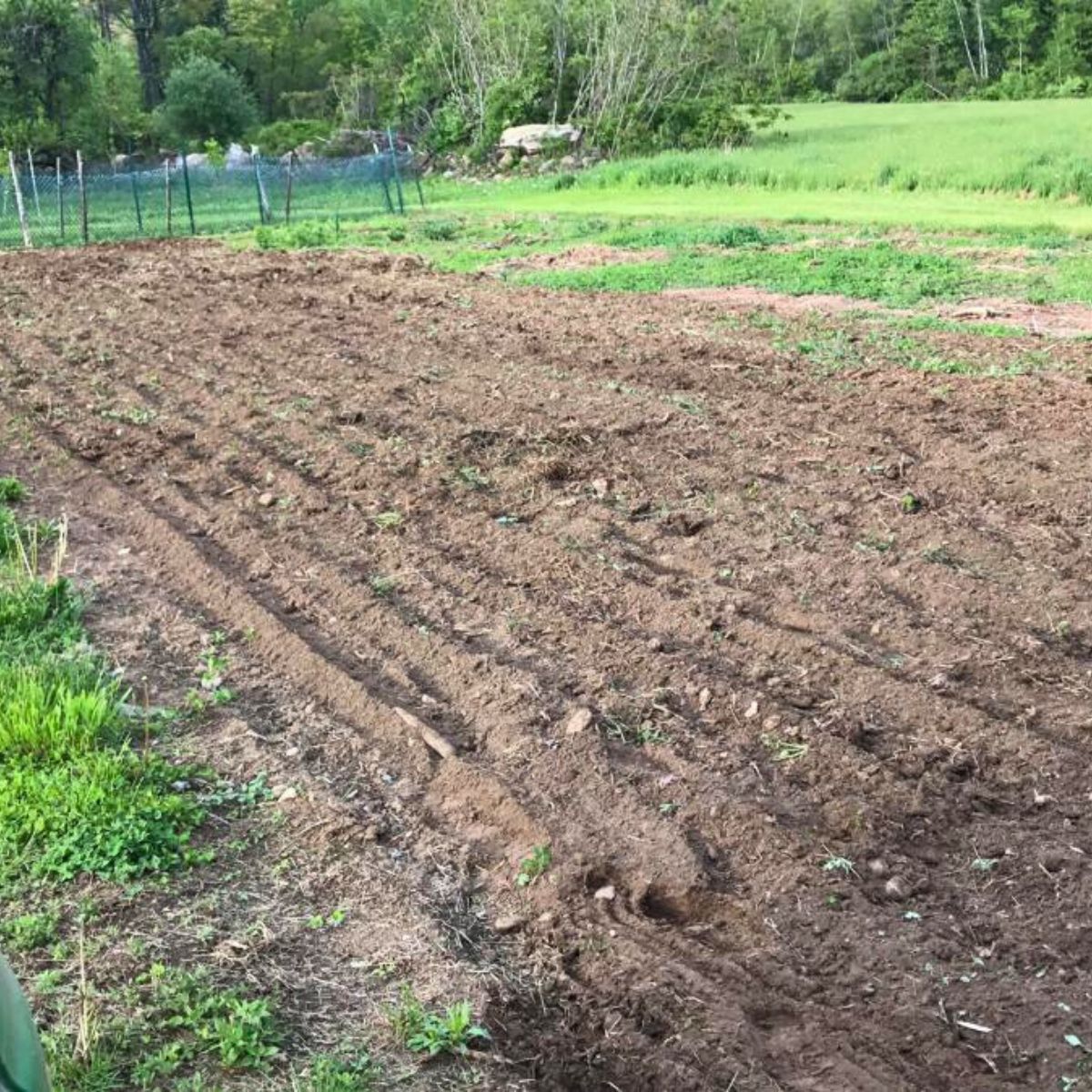
Of course, you can only plant as many tomato plants as you have space for.
You will need a minimum of one square foot* of space for each tomato plant, but really, you should have more than that, especially for large patches that are sharing ground and resources.
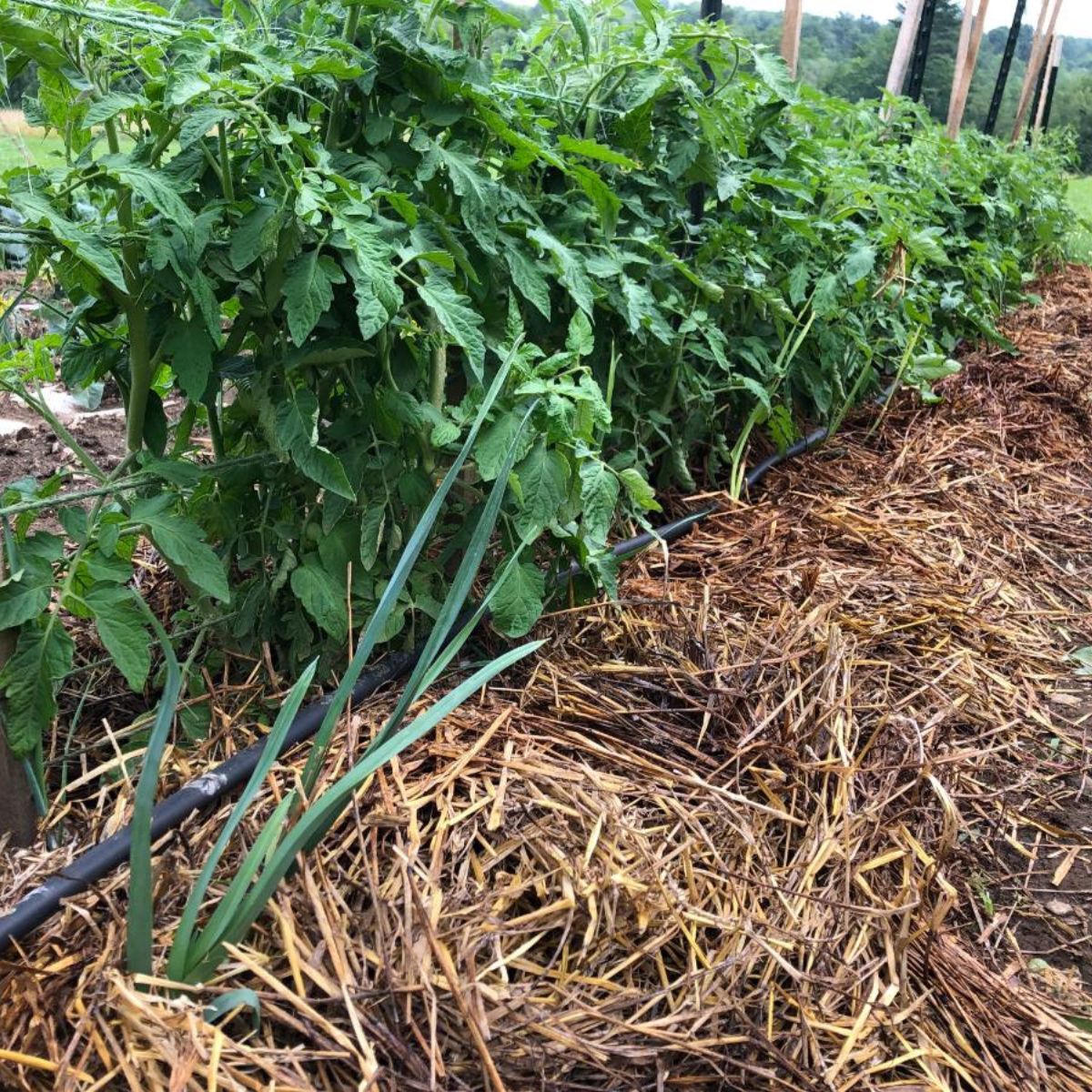
Indeterminate tomatoes need more space than determinate varieties. Indeterminate tomatoes grow continuously and are a larger draw on ground resources. Determinate varieties have a top height and will stop growing, so they can do with less space.
Plan for tomato spacing as follows:
- 2.25 to 4 square feet of space per plant for determinate tomatoes (space at 18 to 24 inches apart; rows should be spaced 36 to 48 inches apart)
- 4 to 6 square feet for indeterminate tomatoes (space at 24 to 30 inches apart in rows 4 to 5 feet apart)
*The recommendation of one square foot of space comes from the “Square Foot Gardening” concept; this would work only for smaller determinate varieties of tomatoes.
Other Tips to Maximize Tomato Space and Usage

- Plant a mix of types, with a couple of different varieties
- Consider at least one dual- or multi-purpose tomato variety; that way, if you don’t have enough of one type for all your fresh eating or canning and preserving, you have something to use for backup; find multipurpose and dual-purpose varieties here
- If you are planning for more than one type of preserving (for example, making sauce and also canning stewed tomatoes or dehydrating, etc, go with the higher end of the suggested range)
- Keep some notes or a journal so you can fine-tune your tomato patch in the coming year or years
- All tomatoes can be used for all uses; it’s just that some fit a certain bill, like sauce making, better than others. However, if you have an abundance of slicers, for example, you should feel free to use them to round out your saucing and canning needs.
- You can supplement your homegrown tomatoes with locally grown canners for saucing, canning, and preserving if you run short; just note how many pounds you bought and adjust next year’s planting accordingly
Explore Tomato Varieties for Different Uses
Check out our Tomato Varieties page for more help finding good tomato varieties that will fit your needs.
Here are a few good places to start:
- 16 Best Heirloom Tomato Varieties
- 11+ Best Tomato Varieties for Dehydrating and Sun-Drying
- 16 Tomato Varieties for Canning
- 11+ Best Tomato Varieties for Dehydrating and Sun-Drying
- 20 Best Tomatoes for Making Sauce