




Tomatoes do quite well when started from seed indoors. Of the different annual vegetables that you can start for your garden transplants, tomatoes are one of the more manageable ones.

Jump to:
Why grow your tomato transplants yourself?
There are several good reasons to start your own tomato plants from seed. Two of the top reasons are that it’s cheaper to grow your own tomato transplants, and you have the widest range of varieties and options to choose from if you grow your own.
And then, of course, there is the matter of maintaining control over how your plants are grown from the very beginning. Plus timing, securing a supply, and more…
Besides that, growing your tomatoes completely from seed all by yourself is highly rewarding. And it’s one more skill you can add to your self-sufficiency arsenal! (And if you think that’s good, try saving seeds from your tomato plants to grow next year!)
When to Start Tomatoes from Seed

The point of starting tomatoes inside is to give the plants enough of a head start and to have them big enough to transplant out as plants that are approximately two months old. This is necessary in many (if not most) growing locations because tomatoes are a frost-sensitive plant. So they can only be grown between the last and first frost dates of the season.
Tomatoes are also large plants that take at least two months to grow after transplanting before they produce ripe fruit ready for harvesting. Even the fastest growing and fastest ripening tomatoes, those that have the shortest growing season to harvest, need around 60 days before you can start harvesting.
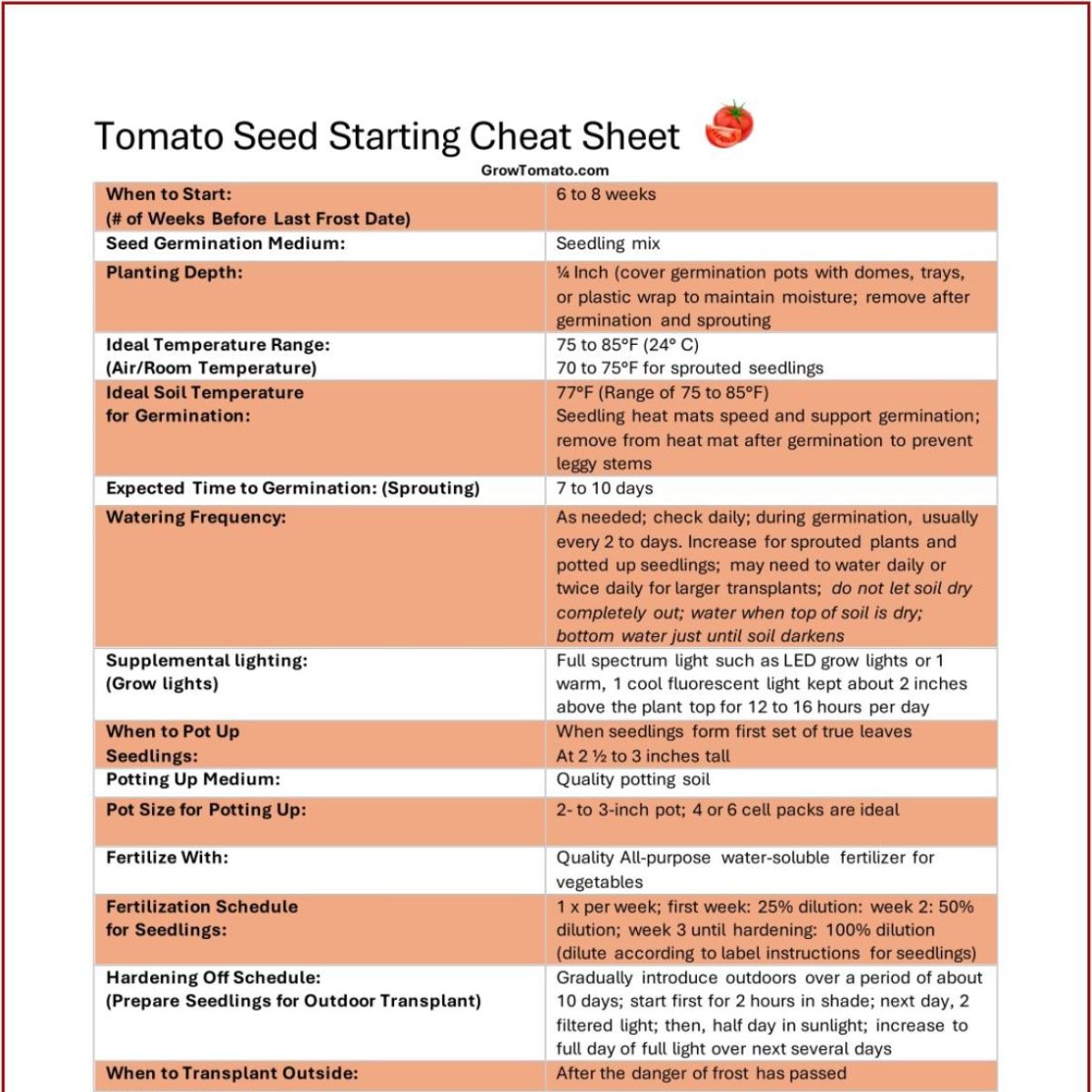
Start Tomatoes Six to Eight Weeks Before Transplanting
The most common recommendation is to start tomatoes from seed six to eight weeks before you plan to plant them outside.
Practically speaking, this is at least six (6) to eight (8) weeks before your last frost date.
Find the last frost date estimate for where you live, then count back six or eight weeks on a calendar. That is when you should start your tomato seeds.
Starting at this time will give you transplants that are about six inches tall, similar to what you’re used to seeing in garden centers or greenhouses for sale.
This is the norm, and transplants of this size generally do well in the garden. You can, however, start tomatoes earlier if you want them a little larger and more progressed when they move outside.
For an Earlier Start

For larger transplants, you can start your tomatoes from seed earlier than eight weeks. A 10 to 12-week start will add a few more inches of growth and, if the growing conditions are right, should produce plants that have thicker, stronger stems, too.
The one caveat is that you don’t want the transplants to outgrow their pots or to become root-bound. This can make it difficult to keep the plants watered well, difficult to provide them with enough nutrients and fertility, and being root bound can increase the chances and effects of transplant shock when they move out to the garden.
You can overcome these issues simply by potting up your larger tomato transplants an extra time.
Around six inches tall is the ideal maximum height for tomato transplants in cell packs (which are typically two inches square and about three inches deep).
Your transplants should not be much more than two to three times the height of the root portion of the pot. Once they get that large, pot them up to a larger pot or cell pack.
Potting up simply means that you plant the whole transplant, soil, roots, and all, into a pot one size larger.
Don’t move to too large a pot, or you will have problems with keeping the right balance of water without under or overwatering.
An earlier start of between eight and ten weeks can often be done without up-potting, but you will need to watch the plants and stay open to the possibility that you may need to do so.
Some longer, slower-growing varieties may benefit from an earlier start and not need up potting.
If you are planting your plants 10 to 12 or more weeks ahead, be prepared to up pot them. This will give you bigger, better transplants, but you should be prepared to put in a small amount of extra care.
How Early Is Too Early?

Technically, there is no such thing as “too early,” and mature tomatoes can even be grown inside.
However, practically speaking, you will not want to start your tomatoes too far ahead, or they will become difficult to transplant. They may endure a lot of root damage when they’re transplanted, too, and this can actually set the plants back. This can cause you to lose some of the weeks of headstart you gained.
Twelve weeks is probably about the limit for practical, early starting, and manageable tomato transplants. If you’re willing and able to pot them up a third time, you could go as early as 14 weeks ahead, but much before that the plants will start needing staking and extra care.
Leave Time for Hardening Off Your Tomato Transplants

In planning your garden, plan in time for hardening off your tomato transplants. This is crucial for plants that are started from seed inside.
Hardening off is a gradual process of introducing indoor-grown plants to outside conditions like sun, heat, cold, temperature fluctuations, wind, and rain. It is easy to do by slowly increasing the time your tomato transplants spend outside over a period of two weeks and slowly introducing them to standing out in full sun.
You can count the last two weeks of growing as your hardening off time, but you do need to plan to do it so the plants are acclimated and do not burn or shock too much when they suddenly have to endure the more variable and challenging conditions of life outside in the garden.
When to Plant Tomatoes Outside

This might make it sound like you can train tomatoes to live in cold conditions, but you cannot. There is a limit to the cold that tomatoes can take, even as fully grown adult plants.
Tomatoes are frost-sensitive. Even a light frost will kill tomatoes, especially young, tender transplants.
When we say that tomatoes need to be hardened off to tolerate cold, what we really mean is cool. Tomato temperatures need to stay above at least 40 F (4.44 C) and for more success and security, above 50 F (10 C).
Wait until the conditions are right before you plant your tomatoes outside (even tomatoes that have been hardened off):
- Plant tomatoes after the last frost date for your area
- If a late frost is predicted, hold off on planting
- If a freak late frost still occurs after you’ve planted your tomatoes outside, protect them with frost fabric or a cloche
- Soil temperatures should be a minimum of 50 to 60 Degrees before you plant your tomatoes outside


