



It’s often repeated that blossom end rot is caused by calcium deficiency. This is true and false.

Understanding this, and understanding how this can be, is key in dealing with blossom end rot, preventing it to the extent possible, and saving your tomato harvest.
Jump to:
- What’s the Real, Most Common Cause of Blossom End Rot in Tomatoes?
- How Can You Help Tomatoes Access Soil Calcium?
- Manage water regularly and consistently
- High nitrogen fertilizer contributes to blossom end rot, too
- Slower growth rates and growth periods result in less tomato blossom end rot
- Some types of tomatoes are more prone to Blossom End Rot than others
- How to Avoid Blossom End Rot in Tomatoes
- What to Do If You Have Blossom End Rot
- The Good News About Blossom End Rot
What’s the Real, Most Common Cause of Blossom End Rot in Tomatoes?

Calcium is the problem when tomatoes get blossom end rot (BER). The problem is that the fruit of the tomatoes is not getting enough of it.
The problem is not, in most cases, a lack of calcium in the soil that your tomatoes are planted in. Most of the time, the soil has enough calcium. But your tomato plants aren’t always able to access it and may not be taking up enough calcium from the soil.
Most of the time that is what causes BER. The inability to access and distribute calcium throughout the plant and to the fruit.
How Can You Help Tomatoes Access Soil Calcium?

The absolute most common problem for tomatoes, the biggest cause of blossom end rot, is inconsistent and/or inadequate watering.
- Too much water reduces plant transpiration
- Too little water also reduces transpiration (because there is no water to be taken up through the plant
- Transpiration is sort of like perspiration for plants
- Transpiration is the intake and then loss of water, which occurs mostly through leaves and stems
- Very little transpiration happens through fruits (tomatoes)
- When water moves through the plant, it deposits calcium (and other nutrients) where it flows
- The more the plant perspires (transpires), the more calcium is moved and left in the different parts of the plant
- Fruits (the tomatoes) are the last place where calcium gets left, which is why when there isn't enough calcium to go around, it is the fruit – and in particular the farthest part of the fruit, the blossom end – that suffers
- Too much water also floods roots and causes root rot
- Too much water dilutes the flow of calcium and causes poor calcium delivery
- Too little water and/or drought conditions mean there is no water for the plants to drink up, so there is nothing to absorb the calcium and no way for calcium to get into and through the plant
- Think of it like sucking up through a straw with no liquid under it – you can try, but there’s nothing to move!
Manage water regularly and consistently

One of the worst situations is when water is inconsistent. When fruits are developing, it’s important that there is a regular, steady stream of calcium available.
The plants won’t move calcium from one place to another after it is deposited in the plant. This only happens as water makes its way through the plant.
So, to continue to supply calcium to the growing tomatoes and get it where it needs to be for cell building, it has to be steadily and almost constantly flowing through the tomato plant.
Regular, consistent water – not too much and not too little – is the key to achieving this.

Tomato plants need one to two inches of water per week. They need less frequent watering that gets the water deep into the ground so it has better access and so the roots can find the calcium down deep in the soil.
Watering once or, at most twice, per week is much better than shallow daily watering. This will help prevent many issues, and especially blossom end rot.
High nitrogen fertilizer contributes to blossom end rot, too

Nitrogen promotes leafy, green growth and stem growth. It also promotes fast, aggressive plant growth.
Fast, aggressively growing plants move calcium and nutrients through the plant more quickly, and that gives developing fruits less of a chance to get calcium.
Aggressive, actively growing plants also have higher calcium demands. Growing leaves and stems need calcium, too.
More of it goes to the stems and leaves so there is little left behind in the fruit. The developing tomatoes are the last to get calcium and the first to suffer.
The transpiration process delivers more calcium to the leaves, where it stays. The more leaves there are, the more calcium that is being pulled away from the tomatoes that are growing.
Leaves transpire more than fruit, so they tend to get the lion’s share of the calcium. This is another way in which leafy growth promoted by high nitrogen contributes to BER.
The ideal growing situation is moderate growth, not too fast and furious, and a slower distribution of calcium to all the parts of the plant.
And so, if there is too much nitrogen in the soil, this can also contribute a lot to the development of blossom end rot.
Slower growth rates and growth periods result in less tomato blossom end rot

To some extent, the development of BER is related to the growth phase of the tomato plant.
Tomatoes that form while the plant is still trying to reach its mature height, or, for indeterminate tomato plants, its slower plant growth phase, are more likely to develop blossom end rot.
Some types of tomatoes are more prone to Blossom End Rot than others

Some tomatoes seem to never get blossom end rot, while others seem like they’re almost a guarantee. Knowing this may help you realize you may be doing everything right. And you still may have at least some tomatoes with BER.
If you are willing to be flexible about what you grow, you can often find a good tomato that will suit your uses without battling blossom end rot.
- Cherry tomatoes are not usually affected by blossom end rot
- Paste-type tomatoes are the most prone to BER
- Large plum tomato varieties are more prone
- Smaller plum tomatoes are less likely to develop BER than the large plum varieties
- Slicers and beefsteaks are less prone than paste and sauce tomatoes, but may still suffer
How to Avoid Blossom End Rot in Tomatoes

- Grow beefsteak, cherry, and other resistant tomatoes if Blossom End Rot continues to be a problem for you
- Do a quick soil test before planting to see if your soil is calcium-deficient
- Test soil for pH (should be between 6.3 and 6.8); high pH blocks calcium uptake (but is less often the problem than watering is)
- Amend soil if needed prior to planting
- Water less frequently (one or two times per week), and be sure to water deeply
- Water only when needed if rainfall is not adequate to achieve one inch of water per week
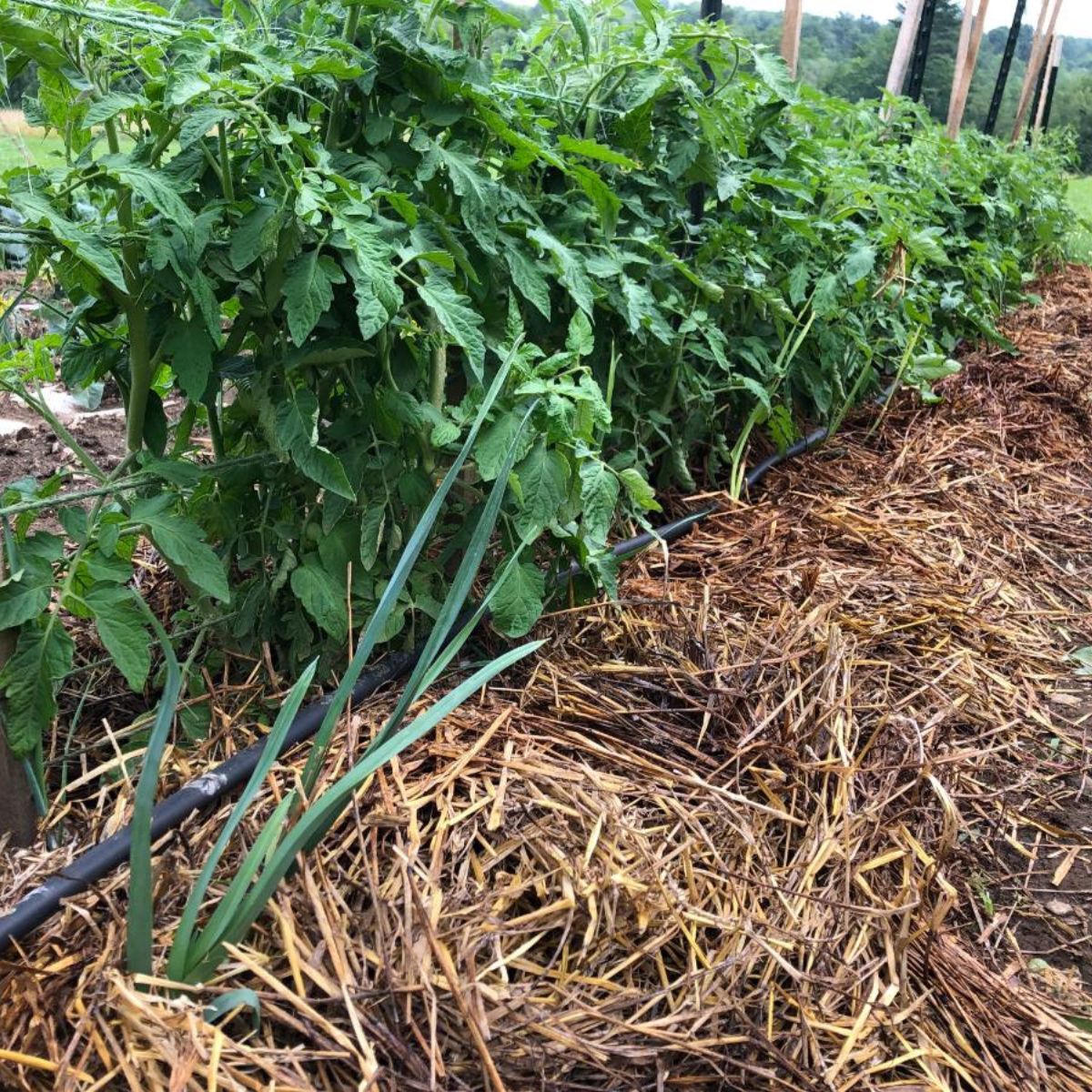
- Mulch tomato beds to preserve consistent moisture
- Try to work watering opposite natural rainfall to avoid overwatering
- Don't give more water if you are getting it from natural rainfall
- Use a rain gauge or this simple garden hack so you always know if there has been enough natural water
- Avoid drought conditions by monitoring and managing water
- If there is no water in, there is no calcium in!
- Remember you can’t make up for low calcium in fruit that is already formed or where the damage is done. Correct and move on.
- Do not overfertilize
- Watch nitrogen contents in fertilizer
- You can’t remove fertilizer that is already in the ground, but you can stop applying it unless or until it is needed. Let the plants grow out of what is there.
What to Do If You Have Blossom End Rot

If your tomatoes do experience BER, all may not be lost.
Blossom End Rot is more likely to impact the early tomatoes and the first fruit set. If it does occur, take action to control and correct the situation.
Often, you can correct the watering problems that hinder calcium uptake, and you can still get fruit from your tomato plants – especially if they are indeterminate tomatoes that will continue to blossom and set fruit.
As the season goes on and the plant’s growth slows down and puts more energy into fruit, the plant may make some correction in calcium delivery and the issue can resolve itself, especially if you change your watering problems.
Here are some steps you can take:
- For a fast correction, you can try spraying your plants with a calcium chloride foliar spray; this is a temporary fix that can give a quick shot of calcium to the plant
- Correct the watering problem that is probably at the heart of the matter – water less frequently and deeply (one or two times per week and one to two inches of water)
- If conditions have been dry, make sure you water often enough. Tomatoes should get one inch of water per week, and it should be divided over two to three waterings separated by days.
- Remove any tomatoes that show spots or signs of BER; they won’t form well, will rot, and be a loss anyway, and the sooner you remove them, the sooner the plant can put energy into developing new fruit and give the calcium to those tomatoes
- Do not apply high nitrogen fertilizers (the first number on a fertilizer should not be higher than the others and do not apply nitrogen-rich fertilizers like Urea).
- Do not allow tomatoes to become drought-stressed; a lack of water that stops calcium and nutrient uptake is just as much of a problem as too much water that dilutes it.
The Good News About Blossom End Rot

There is good news about blossom end rot, and that is that it is not really a disease as such. It is only a nutritional deficit.
Why is that good news? Because it means you can take steps to correct it, to stop doing what you might be doing that is contributing to the BER, and even have this year’s plants recover and produce.
It also means that this is not a rampant disease caused by uncontrollable fungal spores, bacteria, or viruses. It won’t spread from one plant to another and it won’t jump to other garden vegetables.
If other plants have blossom end rot it is because they are experiencing the same conditions that are prohibiting calcium uptake that your tomatoes are. (Other types of garden plants can suffer from BER, including peppers and squash and others.)
If BER is allowing secondary infections to set in, you can treat for that. Stopping the BER and stopping the wounds that invite infection will go a long way.
At the end of the day, tomato blossom end rot is not too difficult to deal with, so getting a handle on it can be done just by adjusting a few key garden practices.


