




It’s Mulch!
Do you know the how and the why of it? Read on!

Jump to:
- Where Blight is Borne
- We’re mostly talking early blight, but stopping soil splash helps with late blight, too
- How to Mulch to Protect Against Blight
- The perfect double-duty mulch to protect against tomato blight
- Mulch Sets You Up for Success, But There’s More You Should Do
- What else matters?
- Blight is Part of Tomato Life, Unfortunately
Where Blight is Borne
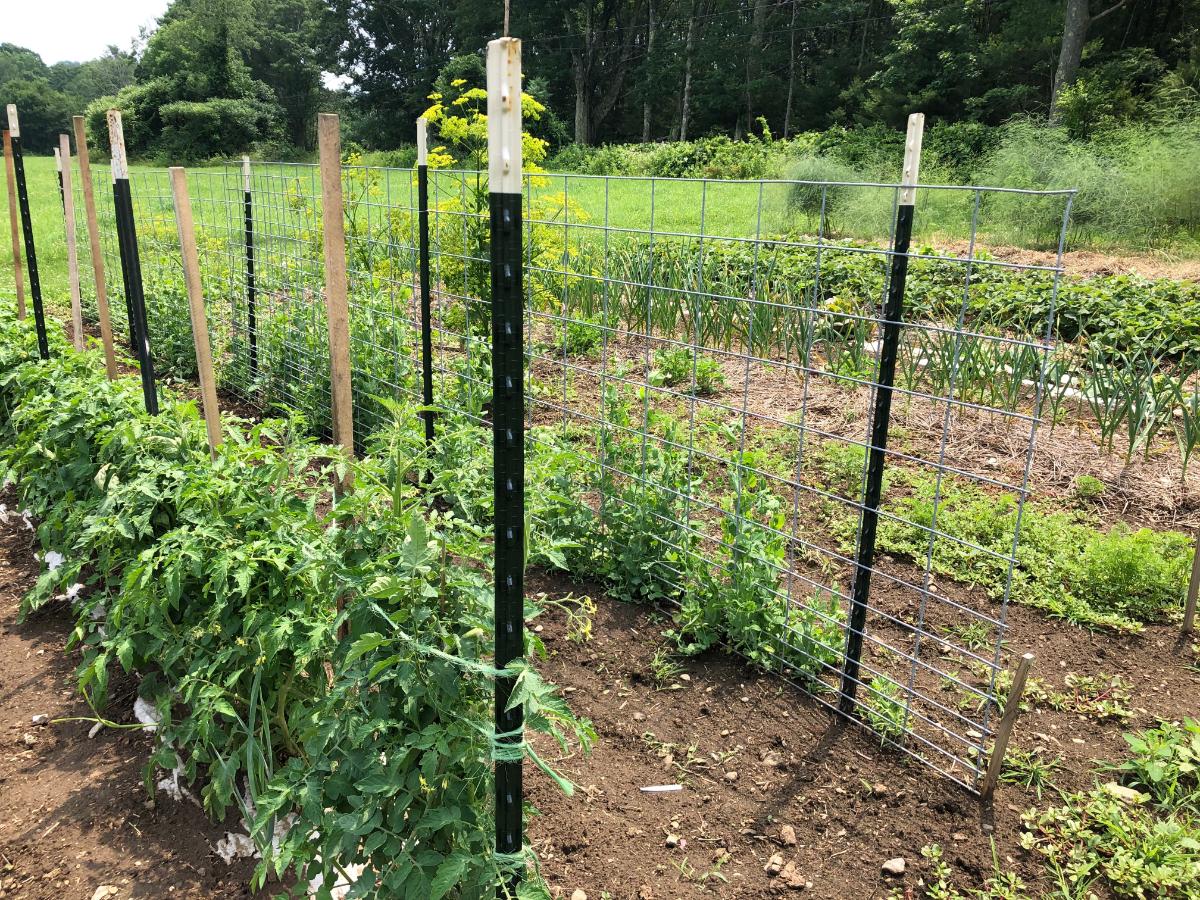
Blight diseases – both early and late blight – are borne in soil. More specifically, they are born from fungal spores that live in the soil.
When the soil has blight spores in it, and enough of those spores splash up onto tomato plant stems and leaves (worst on the leaves), it can colonize if the conditions are right.
The right conditions for blight are cool temperatures (such as what we have at night, especially early and late in the season), wet conditions, and colonizing spores.
Take any one of these out of the equation, and you can do a lot to halt or limit blight.
Weather, warmth, sunlight, and the right growing conditions can often be big factors in whether or not blight takes hold. That, we can’t control.
But we can control things like soil splash. If soil can’t splash up onto your tomato plants, fungal spores will have a hard time finding them and colonization can’t occur. No blight.
And so, mulching is your first defense against soil-borne fungal blight.
Incidentally, other tomato diseases, like leaf spot and wilt diseases, are borne of soil fungus, so mulching and controlling splash helps there, too.
We’re mostly talking early blight, but stopping soil splash helps with late blight, too

There are two types of blight that kill tomatoes.
The first is early blight. As its name implies, this sets in early in the season. It splashes up onto tomatoes when rain or sprinklers splash the soil and it then creeps up the plant from the ground up, following foliage.
Early blight overwinters in the soil, and you can’t really get rid of it. Your best bet is to control those factors that you can control (like soil splash) to deny the disease.
If you’ve ever had blight in your soil before, you can just assume that there are fungal blight spores in your soil.
Late blight can be harbored in soil, but it tends to get to your tomatoes more through wind and air, blowing in with summer storms. It is still helpful to control soil splash to reduce the likelihood of late blight, but mulching will be most effective against early blight.
Late blight usually develops and comes along later in the summer, towards fall. So, if you grow some short day, early maturing tomato varieties and set your garden up to control and prevent early blight, you can often get through the harvest without having to worry about late blight.
Either way, if you want to give yourself the best defense against blight and fungal diseases, the best defense is offense. And the first line of offensive defense is mulch.
How to Mulch to Protect Against Blight

Here’s what to know about mulching as a blight prevention measure:
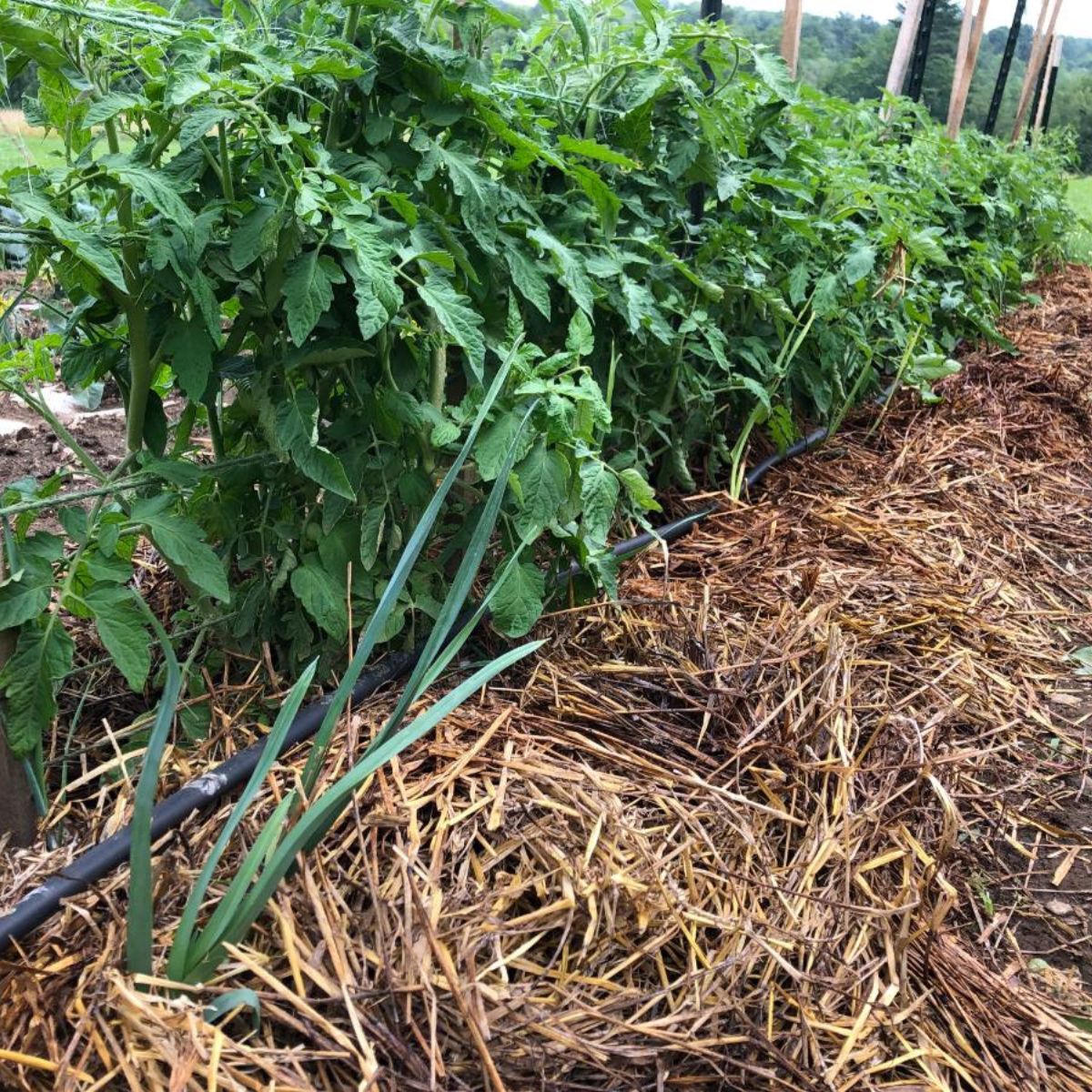
- Mulch to a layer of two to three inches deep
- Mulch a wide area around each tomato plant
- Mulch at least two feet wide around the base of your tomato on all sides
- A three-foot diameter of mulch is even better protection
- If you are planting more than one tomato row, set the next row three or four feet from the first

- You can mulch the aisle, too, for better protection; this is optional but is a good idea
Some good mulches to use to protect your tomatoes are:

- Straw
- Leaf mulch/leaves
- Mulch hay (though it may grow grass, so isn’t the first choice)
- Pine needles
- Wood shavings
- Wood chips (but these can be harder to work around, so not all gardeners like them as vegetable garden mulch)
- Plastic film
- Weed barrier fabrics

- Newspaper
- Paper weed barrier
- Craft paper
- Cardboard
Any of these, when applied three inches thick, should be an adequate barrier against mulch. (Newspaper only needs to be a few sheets thick, cardboard a single layer, and craft paper rolls or weed barrier paper just one or two layers thick.)
The perfect double-duty mulch to protect against tomato blight

For the best protection, do double duty with a combination of paper and mulch.
A good, organic option that will break down and build up the soil after the season is over is to lay a layer of newspaper (not shiny or glossy), craft paper, or weed paper and then lay a good layer of straw or shavings over it.
Whatever you use, two or three inches is enough. Much more than that and you risk creating too much of a barrier for water and aeration.
Mulch Sets You Up for Success, But There’s More You Should Do
Mulching is a simple and important protection to fight back against blight. It may be enough to stop blight spores on its own, but blight depends on other factors, too.
There are other simple steps you can take to fight blight. Use them in combination with mulching for a multi-pronged approach.
What else matters?

Proper watering is the next most important thing you can do to prevent and fight blight (and other fungal diseases).
This means watering at ground level to keep plants dry and not overwatering your tomatoes.
Overwatering doesn’t help tomatoes, but it might hurt them. Keep the water to one to one and a half inches per week.
Don’t water unless you need to, i.e., unless you don’t get enough rain to add up to one to one and a half inches in a week.
Some other things you can do
- Grow some early maturing tomato varieties to get a harvest in before late blight can set in
- Grow some indeterminate varieties that will continue to grow and potentially produce if you keep blight under control
- Look for blight-resistant and fungal disease-resistant tomato varieties to plant (they are out there – even some heirlooms!)

- Spray antifungal agents
- Spray preventatively in humid, wet conditions
- Space plants properly
- Learn more tips for preventing blight – See our article here!
Blight is Part of Tomato Life, Unfortunately

This isn't to say that you will get hit with blight every year, but for most of us, blight is here to stay. We have to assume that blight spores are around, and we must work defensively on that assumption.
The steps and measures to take to prevent and treat blight are not too difficult to do. There are excellent natural antifungal products that, when applied conscientiously and according to label directions, won’t do much harm, even to beneficial insects.
That’s good news because it means that using them both preventatively and as a treatment can be done without too much concern.
You’ve taken the first step by reading and learning. Now apply what you know, and continue to enjoy fresh, homegrown tomatoes!


