


Starting tomatoes from seed is the first step in growing strong garden transplants. Those seedlings will be living for a couple of months inside, so you should plan to fertilize them for optimal growth and optimal health.

Here’s how and when to fertilize your tomato transplants.
Jump to:
- Why You Should Fertilize Your Tomato Transplants
- What to Use for Fertilizing Tomato Seedlings
- When to Start Fertilizing Tomato Transplants
- How Often Should Tomato Seedlings Be Fertilized?
- How to Apply Water-Soluble Fertilizers to Tomato Seedlings
- Don’t overwater just to fertilize your tomato seedlings
- A Good, Basic Schedule for Fertilizing Tomato Seedlings
- Water Tomato Seedlings Regularly Between Fertilizing
- An Alternative Schedule for Fertilizing Tomato Transplants
Why You Should Fertilize Your Tomato Transplants
Should you fertilize your tomato seedlings? Do you need to?
There are varying opinions on whether or not you need to fertilize tomato seedlings that are started indoors. They range from those who don’t fertilize at all to those who fertilize quite heavily.
You’ll have the best success with tomato transplants if you do fertilize them. This should be done on a regular schedule without overdoing it. Overfertilizing tomato transplants can burn and injure, even kill, the plants.
The reasons you should fertilize your tomato seedlings are
- To support strong growth
- To grow strong plants
- To support plant immune health
- To replenish fertilizers that are washed out or used up in the potting soil
Most good quality potting soils do have fertilizer in them, and that will carry your tomato plants for a short while. However, seedlings grow in a small amount of soil, and even though they are small plants with small needs, that need grows with the plants.

Fertilizers get used up as the tomato seedlings grow. They also get washed out from frequent watering. And so, it is well in your interest to regularly fertilize your tomato seedlings.
It’s easy to do, and it takes no more time than watering does. Here’s the best way to fertilize tomato transplants.
What to Use for Fertilizing Tomato Seedlings

The best thing to use to fertilize tomato seedlings is a good quality all-purpose plant food. It is best if this is one designed for garden plants and not houseplants. Choose a fertilizer that is recommended for vegetables and flowers.
The fertilizer should be water-soluble for the best delivery without burning the transplants. This gives the most complete fertilization to your tomatoes.
When to Start Fertilizing Tomato Transplants
Fertilizing tomatoes should start soon after germination:
- When the tomatoes have their first set of true leaves
- One week after you pot up your tomatoes from the germination pot into small pots or cell packs
Tomatoes should certainly be fertilized by the time they have two or three sets of true leaves (tomato leaf-shaped leaves, not the oval cotyledon or seed leaves -- tomatoes in that stage are not yet pulling nutrients from the soil).
How Often Should Tomato Seedlings Be Fertilized?
When tomatoes are small and just germinating, before they have sets of true leaves, they do not need to be fertilized. Once they are growing real leaves and begin photosynthesizing, tomatoes should be fertilized to support their rapid growth.
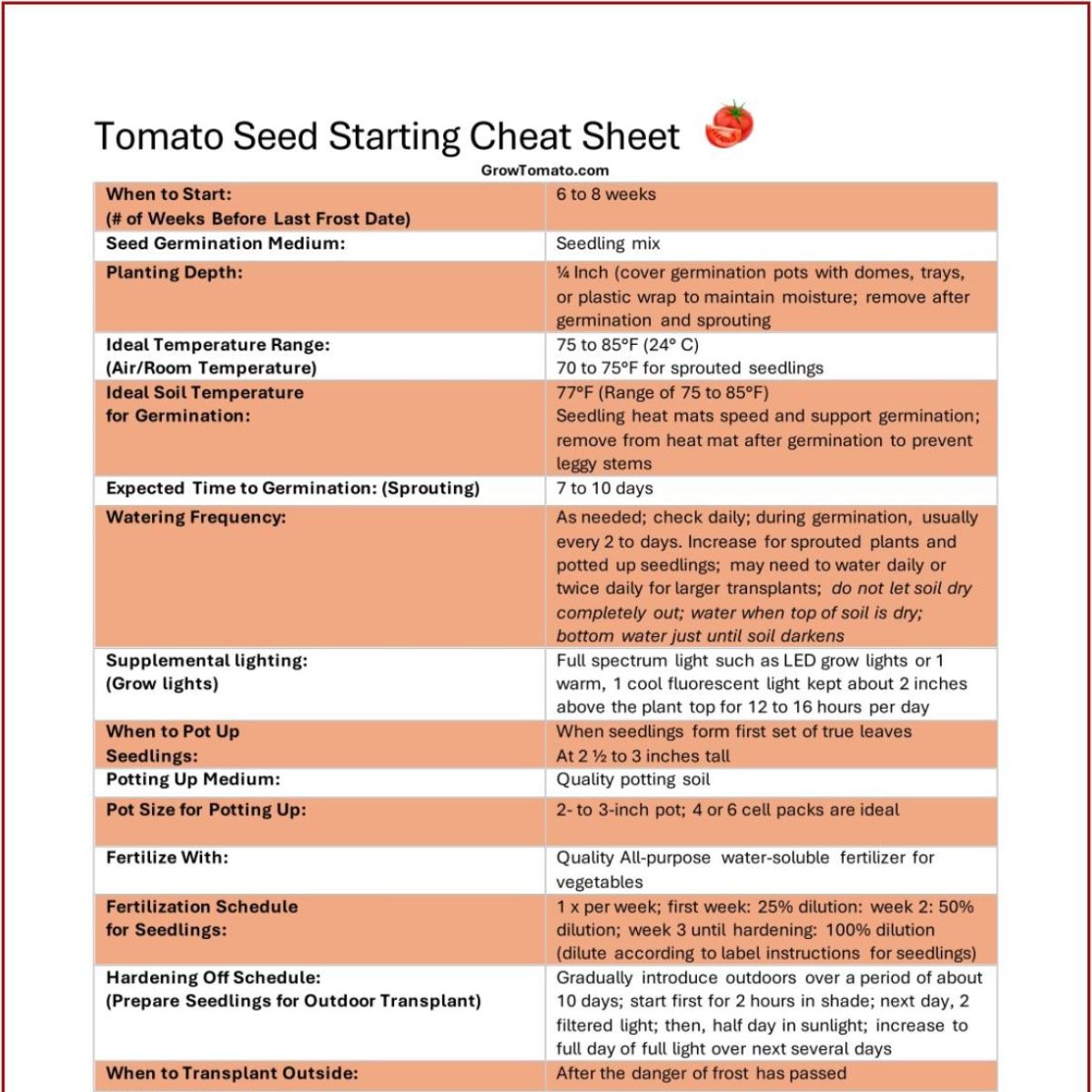
This will start at about week two when tomatoes are potted up to their cell packs or pots. Continue to fertilize every week until it is time to start hardening off your tomatoes.
How to Apply Water-Soluble Fertilizers to Tomato Seedlings

The best and most thorough way to fertilize tomato seedlings is to fertilize through the plants’ water. Dilute the fertilizer in the water when it is time to fertilize the seedlings.
The plants could be watered with a watering can, but that is not the best way to water tomato seedlings, and it is not the best way to evenly deliver fertilizer, either.
Water and fertilize your tomatoes by bottom watering. This means that, instead of pouring water over the top of the soil, you set the pots or cell packs into a tray of water with the fertilizer mixed into it.
Not sure how to bottom water your plants? Read this article on how to bottom water and fertilize seedlings.
Don’t overwater just to fertilize your tomato seedlings
Don’t overwater your tomatoes, though. If the plants don’t need water, put off fertilizing for another day or two until they need watering again.
It is not worth drowning and overwatering your tomato plants just to deliver fertilizer. A day or two late won’t make that big of a difference in the grand scheme of things.
Seedlings live in small pots, so it won’t be long before they need water again, anyway.
A Good, Basic Schedule for Fertilizing Tomato Seedlings

Follow this schedule for fertilizing your tomato seedlings:
- Begin one week after you pot up your seedlings into cell packs or grow pots
- Week One: fertilize at half-strength dilution*
- Week Two: fertilize at full strength according to the fertilizer label
- Week Three through Hardening Off: Fertilize once a week, using full-strength fertilizer according to the label’s instructions
- Hardening off: Stop fertilizing your tomato transplants when you begin to harden them off. This will help set them up for the more variable conditions outdoors.
*Half-strength means that you read the product label and find the recommended ratio for dilution. Use only half as much as what would normally be used.
Water Tomato Seedlings Regularly Between Fertilizing
Keep in mind that tomato seedlings need watering on a regular basis. That might vary depending on the age and size of the plants and on other factors, like the humidity in your home. But they are sure to need watering more frequently than they need fertilizing.
And so fertilizing on a weekly basis does not mean that is the only time tomatoes get watered. In between fertilizing, water as needed (when the top of the soil is dry, but before the soil is completely dried out).
Bottom watering with plain water is still the best way to water tomato seedlings. It will do a lot to prevent fungal diseases like damping off disease!
An Alternative Schedule for Fertilizing Tomato Transplants

If you find it hard to keep track of when you last fertilized or when it needs to be done again, there is an alternative schedule you can use that is a bit easier to follow.
This would be fertilizing with a steady, low dilution. You would fertilize every time you water, but at a much lower strength.
- Use the same water-soluble, all-purpose fertilizer
- Dilute the fertilizer to 25% of the full strength, according to the product label
- Use this low fertilizer and water mix every time you water
- Bottom watering is still best
- It is best to mix your water and fertilizer fresh every time you apply/water
No matter what schedule you find to be the most manageable for you, either will serve your tomato seedlings well. Fertilizing on a regular basis will keep your transplants strong and thriving and in good condition for when the time comes to plant your tomato transplants outside.