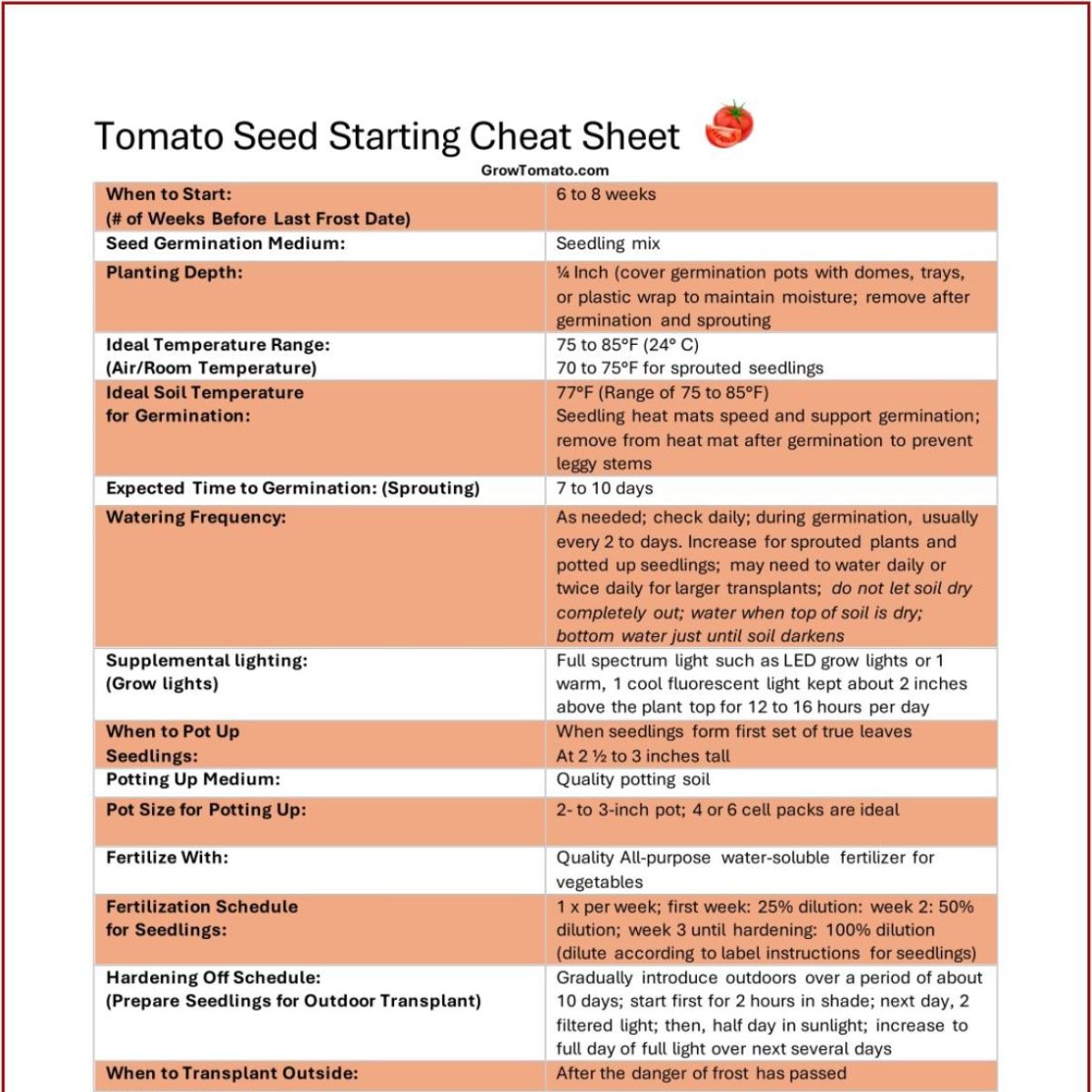




Hardening off is an important step in getting your tomato seedlings ready for life in the great outdoors.

It’s easy to want to skip this step and get straight to planting, but that would be a grave mistake.
If you’ve ever questioned whether you “really” have to harden off your tomato transplants, this list is for you!
Jump to:
- 10 Important Things Hardening Off Tomatoes Does for Your Plants (And Ultimately, Your Harvest)
- 1. Hardening Off Acclimates Tomatoes to Strong Sunlight
- 2. Hardening Off Acts Like “Sunblock” for Tomato Leaves
- 3. Hardening off Makes Tomato Stems Strong
- 4. Hardening Off Strengthens Leaf Connections
- 5. Hardening Off Helps Tomatoes Stand up to Stronger, Gustier Wind Conditions
- 6. Hardening Off Preserves the Photosynthesis Factory for Tomato Transplants
- 7. Hardening Off Reduces Moisture Loss in Tomato Transplants
- 8. Hardening Off Prevents Shock
- 9. Hardening Off Stops Stunting
- 10. Hardening Off Prevents Premature Tomato Death
- Hardening Off is Essential, No Matter What Kind of Growing You’re Planning to Do
- Hardening Off Helps Tomatoes Prepare for Varying Conditions of All Sorts
- The One Limitation of Hardening Off
- Hardening Off Tomato Transplants is Well Worth Your Time
10 Important Things Hardening Off Tomatoes Does for Your Plants (And Ultimately, Your Harvest)
There’s a lot going on when you harden off tomato plants. To help convince you it’s worthwhile, here’s a list of 10 very important things that hardening off accomplishes for your tomato seedlings.
1. Hardening Off Acclimates Tomatoes to Strong Sunlight

Even with great indoor grow lights, the light that tomatoes get when growing indoors is not the same as the strong light they will get from the sun -- no more than the lights in your house are the same as you sitting unprotected in full sun!
Even a sunny spot indoors has filtered sunlight. The strength and intensity are still not the same.
One of the most important things hardening off does is slowly introduce tomatoes to full sun. It builds them up to withstand it, similar to how a light tan or build-up can help your skin withstand more direct sun exposure.
2. Hardening Off Acts Like “Sunblock” for Tomato Leaves
The process of hardening off not only helps tomatoes take the sun, but it actually physically prepares them to do so.
As the tomatoes see more sunlight, they start to build up a stronger surface barrier. The tomatoes develop a waxy coating that acts as a sort of natural sunblock. They won’t have built this indoors, because they never needed it there.
This coating stops tomatoes from getting burned by the strong, intense sunlight. That’s important. Tender indoor tomato leaves can easily be burned outside. Transplants won’t have as many leaves as mature plants, and that means that any burning will seriously reduce the surface area the plants need to support themselves.
3. Hardening off Makes Tomato Stems Strong

Gradually introducing tomatoes to outdoor conditions like wind, breeze, and stillness helps to strengthen the stems. The vibrations trigger thickening and strengthening of the tomato’s stem.
An indoor fan helps to do this, too, but not to the extent that the stronger and more variable conditions do outside.
4. Hardening Off Strengthens Leaf Connections
The same occurs for the stemmy connections of the leaves. This is important so that leaves do not break off with their first strong wind.
Transplants have a limited number of leaves, so they can’t afford to have too many broken or injured.
5. Hardening Off Helps Tomatoes Stand up to Stronger, Gustier Wind Conditions

All of this together prepares the whole plant to be able to bend and not break in stronger outdoor wind conditions. If a tomato becomes broken at the stem, the plant will die. It cannot come back from that level of serious damage.
6. Hardening Off Preserves the Photosynthesis Factory for Tomato Transplants
Hardening off preserves the tomato plant’s photosynthesis factories. They are primarily the leaves, but of course, leaves without a stem and root to grow on are of no use.
By protecting, building up, and preparing the leaves and their support systems, hardening off maintains the plants’ ability to turn sunlight into energy
It also stops the leaves from becoming sunburned, which kills off cells and tissues in the leaves that are necessary for photosynthesis.
7. Hardening Off Reduces Moisture Loss in Tomato Transplants
The acclimation, along with the waxy coating and sturdiness built into tomato stems and leaves by the hardening off process, builds structure that reduces water loss through evaporation and burning. This is what stops tomatoes from wilting too much once they are planted outside. It also allows the moisture in the plant to be delivered to where it needs to go, maintaining cellular structure throughout the plant.
8. Hardening Off Prevents Shock

Tomatoes that are not hardened off will experience shock when they are transplanted.
This is seen mostly as transplant shock, but in fact, shock can occur even in the pot before transplanting if the move outside is too abrupt and too permanent.
Shock can be a serious growth disruptor. Some effects can be permanent, and the plant may never truly rebound to reach its full potential.
9. Hardening Off Stops Stunting
With shock and delayed or damaged growth comes plant stunting. Stunted plants do not always recover to grow properly. Those that do will have lost precious weeks of growing time. This sets your tomatoes back unnecessarily.
10. Hardening Off Prevents Premature Tomato Death

Shock, leaf damage, stem damage, inability to withstand conditions, and inability to absorb nutrients and water…any or all of these can cause plant death. Fortunately, it’s all preventable, too, with a simple process of hardening off.
Preventing the demise of your precious plants is the number one reason to harden off your tomato transplants before they find their permanent garden home.
Hardening Off is Essential, No Matter What Kind of Growing You’re Planning to Do

It’s important to note that hardening off is important for all tomato plants that will live outside. It doesn’t matter if the plants are being planted in the ground, in a raised garden bed, or in containers for a container or patio garden.
The conditions that tomato plants need for growth, blossoming, fruit production, and ripening are the same no matter what the plants are growing in. And that means the conditions and sunlight they experience will be basically the same.
So, no matter how you plan to grow them, harden off your tomato transplants before they start to live permanently outside.
Hardening Off Helps Tomatoes Prepare for Varying Conditions of All Sorts
What this all comes down to is helping your tomatoes safely transition from the very protected, steady conditions of indoor living to what can be some stressful and widely varying conditions outside.
Imagine you lived your whole life in the most optimal of conditions, with all your food and water needs provided for, and no challenging temperatures or conditions. And then suddenly, you’re thrown into a brand new set of circumstances you never knew existed.
You’d be cold, uncomfortable, shocked, dazed, and confused.
That is basically what happens to tomato transplants that are not hardened off properly. It’s easy to avoid by taking a little bit of extra time to harden your tomatoes before you move them outdoors for good.
The One Limitation of Hardening Off

The one thing hardening off cannot do, which people do not always understand, is to make them into something they are not.
Tomatoes are not frost-tolerant plants.
They are heat-loving plants that will die if they directly experience a frost. In fact, many resources say that prolonged temperatures in the 40 degree range (4.4 C to 10 C) can stunt tomato growth (although it will not kill them).
So, look to hardening to prepare your tomatoes to thrive outdoors, but don’t look for it to make them something they are not.
Don’t look to it to transform your tomatoes into frost-tolerant plants.
Follow the recommended timing for moving those plants outdoors, and don’t plant tomatoes outside before your last frost date. They won’t make it, even if they are well hardened off!
Hardening Off Tomato Transplants is Well Worth Your Time
Hardening off is a simple process of gradually introducing tomatoes to living outside. It moves them from their very stable, protected environment to one where they can expand and grow, ready to combat all the conditions they are naturally capable of combating.
Hardening off your tomato transplants, including transplants bought from a greenhouse or nursery, is a necessary step for the best survival and best growth of your tomato garden. While it may seem like a time-waster of sorts, it is not.
The benefits and strength gained by your tomato transplants are well worth the extra time and effort, and it only takes about two weeks.
Tomatoes that are not hardened off are far more likely to succumb to their new, more challenging conditions. The stunting and shock that you prevent will more than make up for the short time you put into hardening off your tomato transplants. It all pays off in the end!