



For tomato lovers, winter can be a very difficult time of year. It’s that time of year when there are no local tomatoes in most growing zones, and the only options are pale colored, cardboard tasting mass marketed commercial tomatoes from the grocery store, that are really nothing like the real thing.

But there is hope! You really can grow your own tomatoes indoors through the winter. Actually, you can grow tomatoes inside at any time of the year.
That’s a good thing to know for urban dwellers who might not have much (or any) outdoor growing space. It’s also a good thing for people whose summer climates are too hot for growing tomatoes in the heat of the summer.
While we’re talking mostly about growing tomatoes inside in the winter, the same set of instructions can be used to grow tomatoes indoors at any time of year.
Jump to:
- Choose the Right Variety
- Start from Seed in a Germination Pot
- Pot Up to a Growing Pot
- Give it Light
- Keep It Warm
- Fans Help Air Circulation, Disease Control, and Stem Strength
- Water as Needed (from the Bottom Up!)
- Fertilize Indoor Tomatoes
- Pollinating Indoor Tomatoes
- Picking Indoor Tomatoes
- Anyone Can Grow Indoor Tomatoes at Any Time of Year!
Choose the Right Variety

First, learn about which types and varieties of tomatoes are best for growing indoors. Unless you are heating a greenhouse with a tall ceiling, you will not want to grow the more common garden tomatoes. They’ll just be too large.
Many of them are indeterminate varieties that will continue to vine and will grow to six feet or more. That’s a bit much inside a home. It also would require a large pot and soil, and a lot of extra light, which you’re probably going to need to supply with grow lights.
For inside growing, you want a miniature, dwarf, or semi-dwarf variety. Basically, it is something that can fit in a typical houseplant pot. If you have a bit more room, you can grow a small bush variety of tomato. It’s a little more of a commitment, but with that commitment comes bigger returns, too. You can also grow full-size tomatoes this way.
To learn about the best tomato varieties for indoor growing, check out our article here: 8 Best Tomato Varieties to Grow Indoors
Start from Seed in a Germination Pot

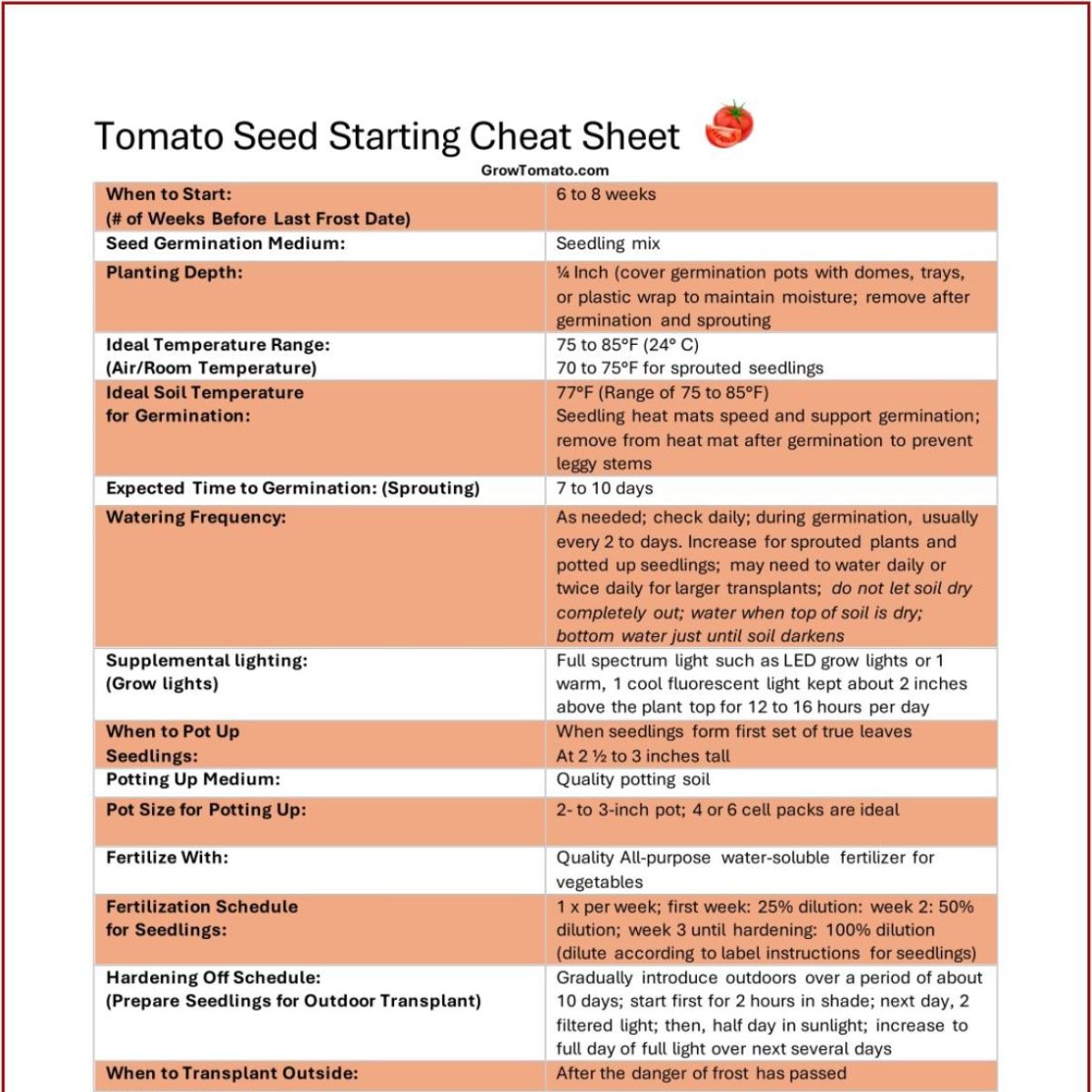
You’ll almost certainly need to start your indoor tomatoes from seed. This is partly because you will need more control over the type and variety than you do in the summer. It is also because there really just isn’t anyone growing tomato transplants to sell to you in the fall or winter when you want to get growing.
If you happen to have access to an appropriate variety, one other option could be to take a cutting of that plant and root and propagate it in soil. This really works well and can save some time, but having varieties that are appropriate for growing indoors to take cuttings from isn’t all that likely.
For best results, start in germination pots
For best success, our recommendation is to start seeds in small germination pots, just as you would for transplanting into your summer garden. To learn the best way to do that, read here: 2 Simple Methods to Start Tomatoes from Seed.
This method is the most reliable and covers you in case some seeds don’t germinate. It’s the best way to give your indoor tomato plants a solid start. Don’t worry -- it only takes a small space to start seeds.
Not sure when to start your indoor tomatoes from seed? Here’s more on that subject: When To Start Indoor Tomato Plants for Winter Growing
Pot Up to a Growing Pot

After your baby tomato plants have two sets of true leaves, it’s time to pot them up into the pot, where you will grow them for the rest of their days.
For most dwarf and miniature or micro tomato varieties, you only need a six or 12 inch diameter pot.
While this may seem like a useless extra step, it’s not.
Potting up serves several purposes:
- It ensures that you don’t waste time and materials on seeds that germinate or fail
- It allows you to pick out the strongest and best plant(s) for final planting and growing on. This is important when you are only growing one or two plants.
- It ensures that the seeds and seedlings are not kept too wet. If you start in a large pot, you’ll need to wet all the soil in that pot, and it is more water than the tomato can drink when it’s small. That leads to rot, damping off, and disease. This is explained in more detail here: There’s a Real Reason We Re-Pot and Pot Up Plants in Stages
- Potting up gives you an opportunity to correct early growing issues. For example, if a tomato plant is too leggy and weak, you can plant it deep in the soil and it will fix that problem.
Potting up is not hard.
To pot up your indoor tomato plant:
- Loosen the soil and prick out the tomato plant(s) you want to pot up. Any extras can go in the compost.
- Plant the small seedling in fresh potting soil. This should be potting soil, not seedling mix.
- Water by bottom watering just until the top of the soil is darkened with moisture.
- Put in a warm, sunny spot to grow, or place under grow lights.
- For a full guide to potting up plants, read here: A Comprehensive Guide To Potting Up Garden Plants
Give it Light
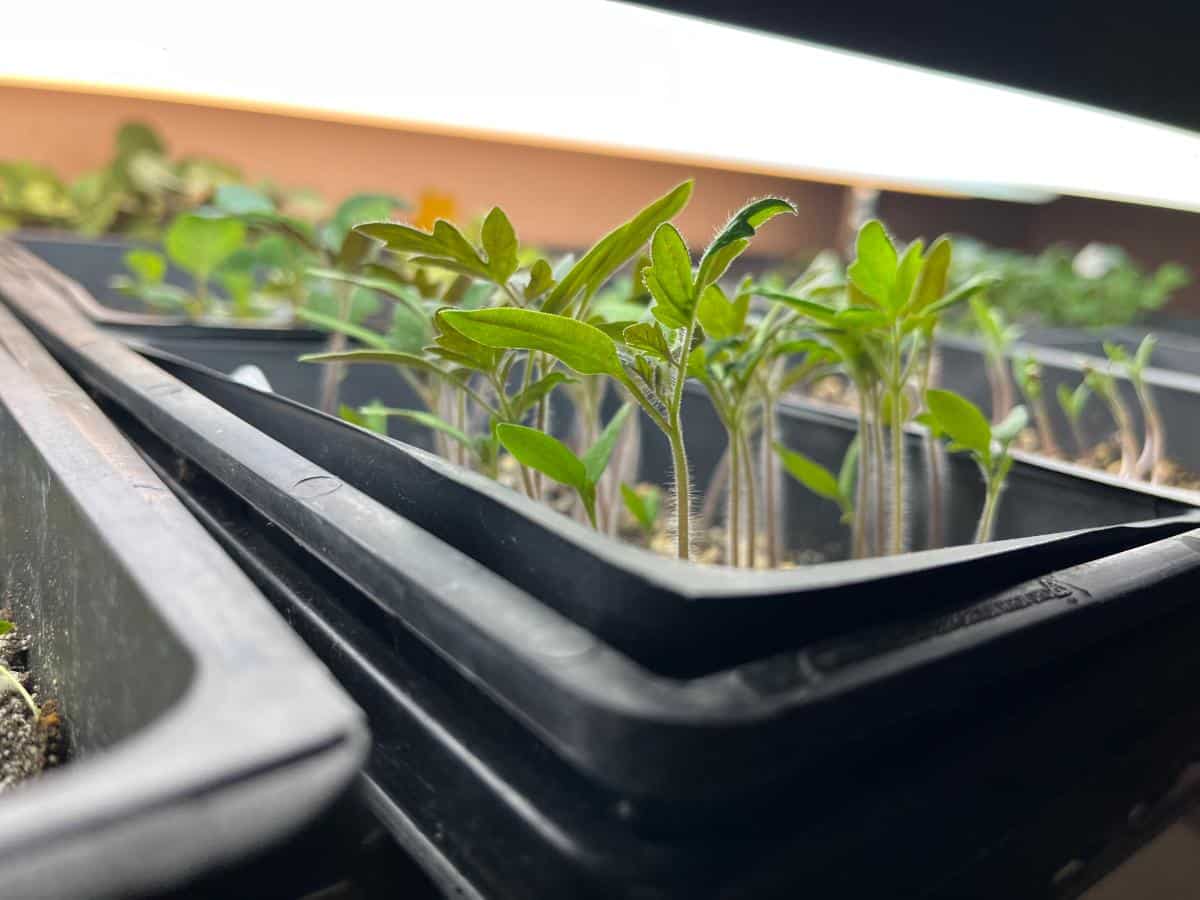
This is one of the most important parts about growing tomatoes inside. In fact, it is really the most important part.
Tomatoes are warm season, summer growers. They need plenty of full sunlight to grow and produce and to ripen their fruits, too.
Full light conditions are considered a minimum of full “sun” for six hours per day. But six hours will be slow growth, and eight is much more appropriate and productive.
Indoors, you’ll need to mimic those conditions. You’ll need to provide grow lights. And because the light is not as direct or as intense as the sun, you’ll need to keep that light close.
How to provide light for indoor tomato plants:
There are many grow light options on the market. You can spend a lot or a little, especially if you’re DIY-inclined.
Simple shop light setup

One easy answer is to set up a two to four foot shop light. Place one “Warm” bulb in one of the socket sets and one “cool” bulb in the other. This is a cheap way to build a grow light and the two types of bulbs will give you a full spectrum of light, which your tomato plant will need.
You can do this with fluorescent bulbs or LEDs.
Shop lights are readily available that will plug into a normal household outlet, and do not require hard wiring.
Shop lights with LED’s
You can build the same unit with full-spectrum LED lights without using two types of bulbs. Just make sure you get the whole spectrum of light. That’s important.
Grow bulbs and converting regular household lamps and fixtures

Many shop lights will accept different types of bulbs. Many grow light bulbs are designed to go into regular shops or household units.
This means that you may not need to buy a specialized grow light unit. You can probably just get a grow bulb or the right spectrums of fluorescent or LED bulbs and use a lamp or fixture you already have.
There are also simple clip-style grow lights with full spectrum bulbs (usually LED these days). These come in different styles. They are little more than a lamp that can clip to a shelf or something similar to be suspended above the plant.
At the end of the day, the fixture or lighting unit doesn’t really matter; it is the bulb(s) and the light spectrum that makes the difference. If you have something to convert and you can find the right bulb, use it!
For more on choosing grow lights and light spectrums, read here:
- Choosing the Right Grow Lights for Seed Starting
- A Cheap And Easy Grow Light Setup For Garden Seedlings
Movable lights are important -- here’s why

One feature that will be important is that the fixture be movable. This is so that you can keep the light close to the plants while they are small, and then move them up as the plant grows.
Once the plants are larger, your light will need to cast a wide ray of light to cover all of the leaves without too much distance. This is where a lot of the clamp-style lights can be useful. Another way to accomplish this (and this works well for shop light setups) is to mount the lights on a small chain, use ‘S’ hooks to hang them, and then you can lift or lower the lights by taking up the links as the plant grows.
When the tomatoes are small, the lights should be at a distance of only two to four inches above the seedling. Just keep an eye on the plants and make sure they are not growing into the light (move the light up if they start to reach it!).
Look for signs of burning -- yellow or brown leaves -- and if the plants are too close and getting burned, move the lights further away. They may be too hot.
If your lights are too far above your plants, the plants will be leggy, and the stems will be weak. It is important to prevent this, especially when the plants are young. As the plants grow larger, they can tolerate more distance but look for these traits (along with yellowing leaves and failure to thrive).
If your plants have thin, weak stems, are yellow, or do not grow well, give them more light. When the plants are large, this may require adding a second light or bulb.
A single light or lamp is usually enough for the dwarf varieties of tomatoes that we grow indoors.
Are windows and sunrooms enough light for indoor tomatoes?

If you have a sunroom or similar setup with at least six to eight hours of strong, full sun, you may be able to get away without a grow light. You’ll have to watch your tomato plant(s) closely and see how they respond.
Most people think they’ll have enough light from a very sunny window, but the fact is this is usually not enough. You might get good light for some hours of the day, but a full six or eight hours inside is hard to come by.
What happens when there is not enough light is that plants grow leggy and have weak stems. They yellow, underproduce or don’t produce at all, and plants may wither and break right off.
If you have some good light but not enough, you can use a combination of direct light in a sun room or sunny window, and supplemental grow lights or lamps for the hours when the sun moves and isn’t giving the plant enough strong light.
Turn towards the light
Turn your tomato plant every few days so that all sides of the plant get even light. That way, the plant won’t bend toward light, and it will be full and even. The plant won’t be lop-sided or risk breaking when it leans too far to one side.
Regular turning should keep your tomato plant growing upright and strong.
Keep It Warm

Tomatoes are warm-season plants, as they originally hail from tropical regions in Central and South America.
That means they need warmth to grow.
No worries, though -- the average home will be warm enough for tomatoes to grow. Grow lights will also increase the temperature immediately surrounding your plants, so that will give them a little more of a boost.
Your indoor tomatoes will need to be kept at least 70 degrees (Fahrenheit -- 21.1 C). Between 70 and 75 is even better. That’s about what temperature people keep their homes. If you keep your home warmer, your tomatoes will be that much happier.
At least this way, your heating bill can help to feed you, too!
Fans Help Air Circulation, Disease Control, and Stem Strength

While not critical, it can help to keep a small fan circulating on or near your tomato plant (or plants) indoors.
- A light breeze from a fan will help your tomatoes grow stronger stems
- It also helps to prevent diseases like damping off disease (a soil-borne fungal disease common to indoor seedlings and the most likely to affect your tomato plant inside)
- The breeze from a fan can also assist in pollination
Water as Needed (from the Bottom Up!)

Keep your tomatoes watered as needed.
- Soil should be allowed to dry down between waterings but should not be allowed to dry out completely
- Wait until the top of the soil dries out a little
- When the top one-half to one inch of soil is dry (in a full-sized pot), water the tomatoes
- Bottom watering is always best
- Bottom watering keeps moisture off the tomato‘s stems and foliage and prevents fungal disease (like damping off disease)
- Place the potted tomato in a saucer or pan of water and leave it there just until water soaks up to darken the top of the soil
- If the pot is too large to move, watering at the base of the plant -- on top of the soil -- is fine, but try not to pour water on the leaves or stem of the plant
Fertilize Indoor Tomatoes
Tomatoes are heavy feeders. Your indoor tomato will grow and produce for many months. The fertilizer that came in your potting soil will not be enough to sustain it for the long term.
- Fertilize your tomatoes once a week
- Start fertilizing when you pot up your indoor tomato plant for the first time. Start with a 25% solution for the first week
- When the tomatoes are small (seedlings up to four to six inches tall), fertilize once a week at half strength (half of the dilution on your fertilizer’s label instructions)
- After that, fertilize at full strength once a week when you water your tomato plant(s)
Pollinating Indoor Tomatoes

Tomatoes are largely self-pollinating (the flowers from the same plant fertilize the others to induce fruit formation). Outside, this is done when the wind spreads the pollen. Bees and other pollinating insects also help.
Inside, you will need to help your tomatoes pollinate.
If you have a fan on your tomato plant, that may be all the help it needs.
If you don’t, you should give your plant a hand.
Here are some easy ways to help your indoor tomato plant pollinate so it can set fruit:
- Use a fan to mimic outside breezes
- Tap the stem of the plant firmly with a pencil
- Gently shake or wiggle the whole pot or plant
- Tap gently behind individual flowers with a cotton swab or pencil; this will help stimulate flowers to release pollen
- Use an electric toothbrush to stimulate pollen release
- Use a paintbrush or swab to wipe pollen from one flower into the center of another
Pollinate when you see that the flowers are open. The buds need to be open for the pollen to fall out and onto other flowers.
If you have a great-looking plant but low tomato production, start pollinating by hand, add a fan, or increase your efforts.
Picking Indoor Tomatoes

Picking tomatoes from indoor plants is not unlike harvesting tomatoes that grow on plants outside.
Pick tomatoes when they are ripe and give slightly when lightly squeezed.
Do note that some sources recommend picking indoor tomatoes before they are fully ripe and then letting them complete ripe in a bowl on your counter. The thought behind this is that you have a limited amount of plants growing indoors, and picking a little under-ripe will help preserve and channel your plant’s resources.
By picking a little early and completing ripening off the vine, the plant can put more energy into the next tomatoes. It should speed up the cycle of readiness and picking. It can also help you to get bigger, fuller fruits.
If you prefer the taste of vine-ripened tomatoes, though, it’s fine to wait and pick them when they’re fully ripe, too.
If you find yourself with an abundance of tomatoes that you can’t eat when they’re picked, it’s best to store them on a counter at room temperature, and not in a refrigerator. You’ll get better flavor, texture, and holding time that way.
Here are some helpful tips for storing tomatoes. This will give you the longest and best storage:
Don’t forget -- you can use indoor tomatoes for green tomato recipes, too!
Anyone Can Grow Indoor Tomatoes at Any Time of Year!
Indoor growing and winter gardening inside can help us continue to grow and enjoy vegetables like tomatoes all year long.
Whether you are growing inside because you have no outside option or because it is winter outside, you can still enjoy fresh, healthy, more nutritious, picked-at-peak tomatoes by growing them inside -- at any time of year and no matter where you live!