



Did you start your tomatoes from seed, and now they’re getting leggy? Or, have you grown tomatoes from seed in the past and had problems with the seedlings getting leggy?

Need to know how to prevent it or stop it once it’s started?
Here’s help!
Jump to:
- What are “Leggy” Seedlings?
- Leggy Tomato Seedlings -- A Pretty Common Problem!
- Why Is Being Leggy A Bad Thing for Tomato Seedlings (Or Any Seedlings, for that Matter!)
- Preventing Legginess in Tomato Seedlings
- The Number One Cause of Legginess in Tomato Seedlings
- Other Common Contributing Factors that Cause Legginess in Tomato Seedlings
- Stopping Legginess After It Has Started
- Pet Your Plants and Add a Fan
- Legginess in Tomatoes Can Often Be Corrected!
- Solving Seedling Legginess Solves Most Tomato Seed Starting Problems!
What are “Leggy” Seedlings?
First off, what is a leggy tomato seedling? How do you know if this is a problem for you?
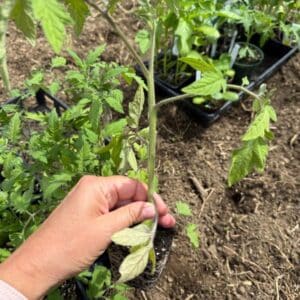
Leggy seedlings are seedlings that grow too tall and too fast. They are characterized by
- Stems of more than one-half to one inch before the cotyledon leaves (the first leaves that open from the seed sprouting)
- Long stems of two or more inches before there are any true leaves (mature leaves that look like miniature versions of adult plants’ leaves)
- Thin, thready stems
- Pale-colored stems that appear almost translucent, whitish, or practically see-through
- Stems that twist, bend, fall over, or break because they are not strong enough to hold up the seedling’s top
Leggy Tomato Seedlings -- A Pretty Common Problem!
If you have or have had leggy tomato seedlings, you are not alone. It is quite common and very easy to get leggy seedlings when starting seeds indoors. And it doesn’t just happen to tomatoes. However, since tomatoes grow relatively quickly once they sprout, it can seem like they are more prone to legginess. In fact, that’s true of anything fast-growing, like lettuce, spinach, greens, squash, cucumbers, and more.
The fact that legginess happens quickly in tomatoes is all the more reason to learn about it and take steps to prevent it. And if legginess starts, the more reason to act quickly to take steps to stop the legginess that is already happening.
Why Is Being Leggy A Bad Thing for Tomato Seedlings (Or Any Seedlings, for that Matter!)

Legginess for tomato seedlings is a problem because it results in weak plants, plants more prone to rot and death from damping off disease, and stems that bend and break before the plant can grow sturdy enough to support itself.
Because the seedlings have only a few top leaves, breakage at this point spells death for the seedling. There are no leaves to continue photosynthesis, which is the food source for your tomato plants. You’d have to start all over once legginess has progressed to this point.
Preventing Legginess in Tomato Seedlings
The first step in preventing legginess in your tomato seedlings is to understand the most common causes of it.
There are three main reasons why tomato seedlings get leggy.
The Number One Cause of Legginess in Tomato Seedlings
The number one cause, the absolute most common cause of legginess in seedlings, is a lack of light.
When plants don’t get enough light, they stretch and reach toward the light source in an effort to grab all the light they possibly can. This causes them to grow tall and stretch quickly.
A lack of light can mean different things, though. It can be
- Light that does not provide a full spectrum.
- Not having light for long enough (hours) of the day.
- Light that is appropriate and long enough but that is too far away.
1. Full Spectrum Light for Tomatoes

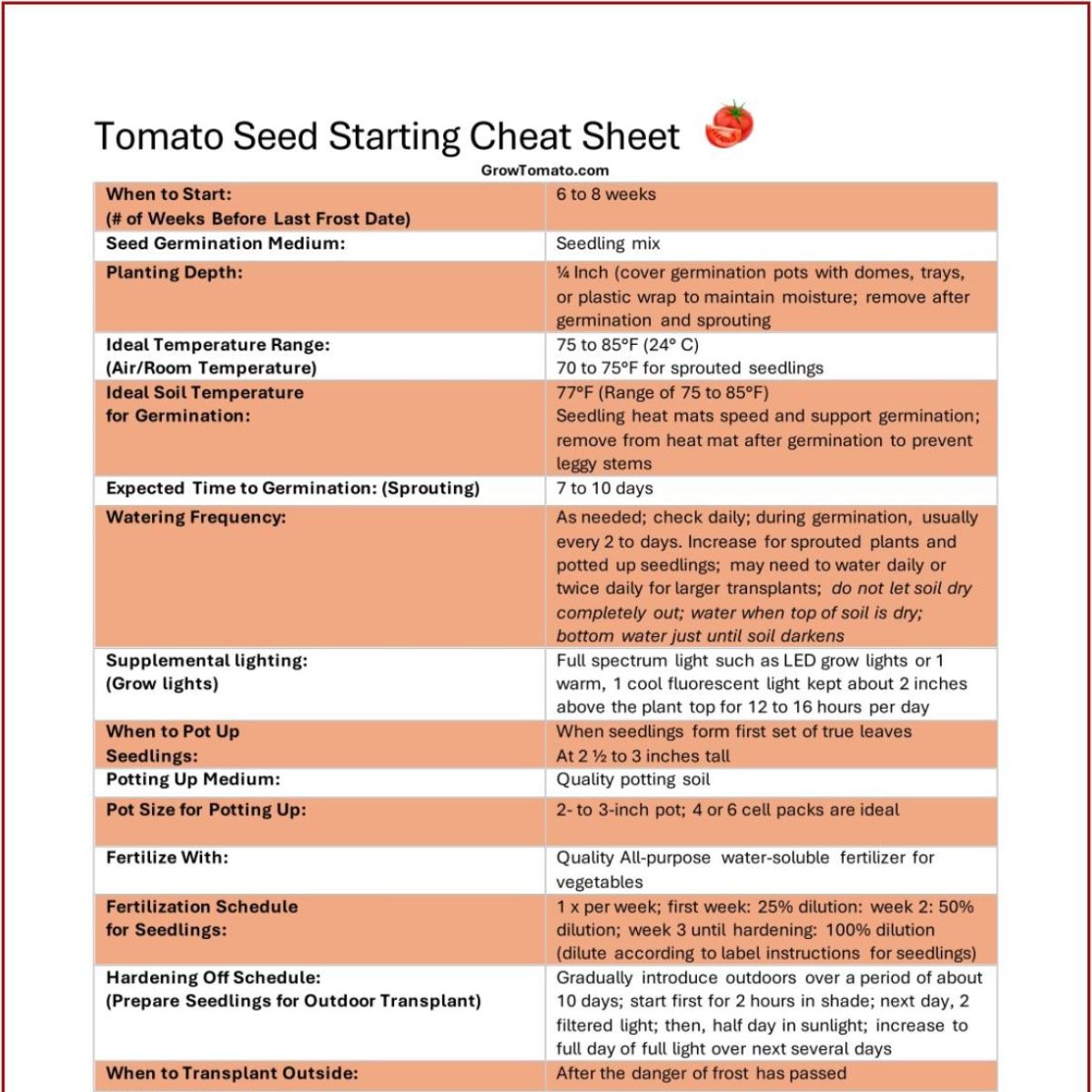
Tomatoes (all seedlings) need the full spectrum of both “warm” and “cool” light. Regular household lights may or may not provide this (often, they don’t). Even fluorescent lights and LED lights won’t necessarily have a full spectrum of light unless they are specifically designed to do so.
If you want or need to use regular household lights, just make sure you use two types of bulbs: one on the warm spectrum and one on the cool system. Use the two together and it will make up the full spectrum your plants need. This can be a cheap, accessible, available way to get full spectrum light without investing in a costly setup.
If you use grow lights or grow bulbs, they will carry the full spectrum. They may cost more, and some people don’t think they last as long as household bulbs, but they will provide all the rays of light your tomatoes need.
You can also use a full spectrum grow light bulb in a normal household fixture, such as a lamp, as long as you can get it close enough for all your seedlings.
2. Not Having Light for Enough Hours of the Day

You may have the right type of light, but are you providing it for enough hours of the day?
Tomatoes are full-sun plants. Outside, they grow when they can get 12 to 14 hours or more of daylight. Inside, we need to replicate this.
Most growers who start tomatoes inside do so because their growing season is not long enough to plant frost-sensitive tomatoes if they are not started indoors. That means that the day length is often not long enough yet, and/or the direct light that shines on your tomato plants does not stay in place for enough of the day for your tomato seedlings to get enough hours of light.
Your tomato seedlings will need strong, direct, full-spectrum light for at least 12 hours each day. Fourteen hours is a safer bet, and even as long as 16+ hours is not too much. Make sure your grow lights are on your tomato seedlings for a minimum of 12 hours per day.
3. Light Too Far Away from Seedlings

We also need to make up for some of the slack that artificial light has in intensity. Artificial lights simply are not as strong as real sunlight.
Just because light shines down upon your seedlings doesn’t mean it is strong or intense enough to satisfy your plants. And if it is not, the plants will continue to reach for it, resulting in legginess.
Grow lights should be kept within two to four inches of the tops of your tomato seedlings. You should not see browning or burning, but they need to be close enough for the tomatoes to absorb enough strong light.
The best way to do this is to have your grow lights on a movable chain or framework. Then, you can start with it very low and raise it as your tomato seedlings grow. For as long as your seedlings are indoors, the lights should be that close.
Other Common Contributing Factors that Cause Legginess in Tomato Seedlings
There are two other common causes of legginess in tomato plants.
- High heat
- Over or under watering
1. High heat

High heat causes rapid growth. Young tomato plants that don’t yet have leaves or branches don’t have anywhere for the growth to go but up, resulting in overly long, leggy stems.
High heat can be from the air or from the soil. High air temperatures are not likely to occur in your home, but if plant lights are too close or too hot (sometimes a problem with LED lights), that may be the case.
High soil temperatures are more common for seedlings growing indoors. The most common cause of this is keeping seedlings on heated grow mats after they have sprouted. While that helps with sprouting, it’s often too much heat for growing seedlings. Take tomato plants off of heated mats after they have sprouted and started.
2. Improper watering

Overwatering can cause issues with oxygen absorption (because it diminishes oxygen levels in the soil), and causes the tomatoes to stretch out to get more.
Underwatering can trigger tomatoes to go through growth spurts when they do get watered, and that can cause them to grow upwards quickly instead of the slower, more consistent development that occurs with regular watering. Your tomato seedlings should be allowed to dry out a bit between watering until the top of the soil is dry (but not all the way down to the roots).
Stopping Legginess After It Has Started
As soon as you sense that your seedlings are starting to get leggy, take steps to stop the leggy growth. This can occur as early as the first week, so be prepared with the right growing setup and react quickly once you start to see lanky, thin-stemmed seedlings.
The first step is to correct any substandard growing conditions:
- Adjust light height
- Get full spectrum bulbs if necessary
- Leave grow lights on for more hours of the day if needed
- Moderate heat and remove heat mats
- Water only when the top of the soil is dry, and preferably by bottom watering just until the top of the soil darkens with moisture
Pet Your Plants and Add a Fan

Something else that can really help reduce legginess is to stimulate the stems to grow stronger and thicker.
Outdoors, this happens when the wind challenges the strength of the plant and stems. The plants respond by growing thicker stems and stockier plants.
You can mimic the wind by placing a small fan lightly blowing on the plants for at least a few hours of the day.
Your touch will also stimulate thicker stem growth. A few times a day, as you walk by, gently run your hand over the tops and leaves of the plants. The vibration will trigger that stocky stem growth you need.
Legginess in Tomatoes Can Often Be Corrected!
One good thing about tomato seedlings, even very young ones, is that we can often correct their leggy growth. This isn’t true of all types of plants, but it works for tomatoes (and several others, including lettuce and broccoli).
If the legginess is moderate -- within three or so inches of stemmy growth -- you can plant the tomato seedlings deeply to cover up the overgrowth in the stems.
This works because tomatoes are capable of growing adventitious roots and can modify stem cells into root cells when they come into contact with soil and moisture.
- You will need to “up pot” or “pot up” your seedlings to correct the leggy stem growth
- Take the steps mentioned above to correct any issues that are causing the legginess. Do this even before your seedlings are ready to be up-potted and corrected.
- You can’t undo leggy growth, but you can correct it and stop it if it hasn’t gotten too out of hand. (And it’s usually at least worth trying.)
- Wait until the tomatoes have at least one set of true leaves (the first “real” leaves after the cotyledon leaves)
- Pot the seedlings up into individual cell packs or pots. Use a two to four-inch pot, but not larger, or you will have issues with watering and cause new problems.
- Sink the root end far down into the soil.
- You can go as far as within an inch of the top of the seedling or up to the bottom set of leaves if there is more than one set of leaves on the plant. If you are burying a leaf set, gently pinch the leaves off.
- This will anchor the plant more deeply in the soil and will also allow that extra stem to turn into root growth, while reducing the height of the plant, and therefore reducing the top-heaviness that will cause the stem to break.
Solving Seedling Legginess Solves Most Tomato Seed Starting Problems!

With only a couple of exceptions, legginess is what usually does tomato seedlings in early. It’s a very easy and common problem to have. It is also preventable and correctable.
That’s good news for tomato growers! Once you get a handle on how to deal with legginess in tomato seedlings, you’ll find that growing your own tomatoes from seeds is a fairly easy, beneficial, and rewarding way to grow.