


Proper watering is important to all garden plants, but it takes on even more significance in the tomato garden.

Getting enough water to your tomatoes, in the right way, and in the right amounts will help your tomatoes stay strong, access ground nutrients, and avoid scarring and diseases.
Watering tomatoes isn’t just a matter of how much water you provide, either.
So, how do you know if you’re giving your tomatoes enough water? Do you even need to water your tomato plants? How and when might your tomatoes need to be watered by you?
Jump to:
- How Much Water do Tomatoes Need?
- Total water is a combination of natural and supplemental water
- Simple Ways to Tell If Your Tomatoes Are Getting Enough Water
- Get a rain gauge
- Use a second gauge to figure out when to stop watering
- Option 2: Sink a can or cup into the tomato row instead
- Why a simple can is better than a rain gauge in the row
- How to Avoid Disease When Watering Tomatoes
- Overwatering causes tomato plant diseases, too
- Underwatering is a tomato disease contributor, too
- How often you water matters
- Time watering with rainfall in mind
- Signs You Need to Adjust Your Tomato Watering
- Other Tips for Watering Tomatoes
How Much Water do Tomatoes Need?
Tomato plants need between one and one and a half inches of water each week. This is equal to about 2.5 to 3.8 centimeters.
This amount should come from a total of all water sources.
Total water is a combination of natural and supplemental water

Water comes from two sources:
- Nature
- You
During the growing season, the natural water that matters is what we get from Mother Nature. That comes in the form of rainfall.
What your tomatoes get from you is any supplemental water you provide in the form of irrigation. This could be from sprinklers, irrigation systems, drip irrigation, soaker hoses, or hand watering.
If you use water that you collected from a rain barrel or similar device, that counts as supplemental water from you because its application is entirely under your control.
When we measure the amount of water our tomatoes have gotten in a given week, we have to combine the two totals. That way, we have an accurate measure of how much water the tomato plants actually received.
If you keep an eye on the weekly total of rainfall, you can then decide how much more water your plants need, if any.
Simple Ways to Tell If Your Tomatoes Are Getting Enough Water
The tricky part is knowing how much water you’ve gotten from rain and then how much is enough water when you’re watering.
Get a rain gauge

A rain gauge is a simple, effective, inexpensive, and often overlooked gardening tool.
You’ll want at least one, just to know how much rain is falling on your yard and garden in each week.
It can be easy to overestimate rainfall. What feels like a soaking rain and a deluge might not give you as much moisture as you think. On the other hand, a prolonged day or two of rain or off and on showers might not feel like as much as it is.
A rain gauge will take all the guesswork out of it.
Install a gauge so you know how much rain fell and how much more water your tomatoes need this week.
Rain gauges are metered to measure the rainfall in inches or centimeters. When it’s reached an inch or more for the week, you know the tomatoes got enough rain, and you don’t need to water them.
Use a second gauge to figure out when to stop watering

You can use a second cheap rain gauge to figure out when you’ve given your tomatoes enough supplemental water.
This gauge should be placed in the row where it will be in the path of the water so it can collect the amount of water that is falling on the surface of the soil.
There are simple gauges with spiked ends that can be stuck right into the ground in your tomato patch.
Option 2: Sink a can or cup into the tomato row instead

Here’s a second, and even better, option for measuring the water that the soil gets from your watering.
- Instead of using a rain gauge in the row, bury a can or cup in the soil of the row.
- The top of the can should be even with the soil or mulch surface in the row.
- The can should be between one and one and a half inches deep. An empty tuna fish can or cat food can usually is a good size, but it can be any old can that’s the right size.
- If you use a larger vessel or a cup, measure and mark off where an inch is, or cut the cup down to size.
- Make sure that whatever you use for watering, the can or cup is in the path of the hose, etc.
- When the can is full, you’ll know the watering system has been on long enough and that you’ve given your soil enough water.
Why a simple can is better than a rain gauge in the row

The can trick is a better option than using only a rain gauge for a couple of reasons:
- First, it’s not really the best idea to water your tomatoes overhead, such as with sprinklers that rain down on the tomatoes. Soaker hoses or drip irrigation is a much better idea.
- Soaker systems and drip irrigation systems only deliver water at ground level. They are very targeted in their delivery.
- That means that filling a rain gauge that is five or six inches tall will be hard. In fact, it won’t fill at all if it’s not in the path of the water.
- It’s easy to sink a can into the soil just under a drip spigot or under the soaker hose. When it fills up, you just shut the water off. Simple!
- If you time it and keep track of how long it takes that system to fill to the one-inch mark, you can even set a timer or reminder to shut off the water when it’s been that long.
How to Avoid Disease When Watering Tomatoes
We mentioned that overhead watering is not the best idea for tomatoes. Disease control is the main reason for this.
Overhead watering soaks the plants, too, and when the plants are large, they can sometimes block the water from falling to the ground at the roots where it needs to be.
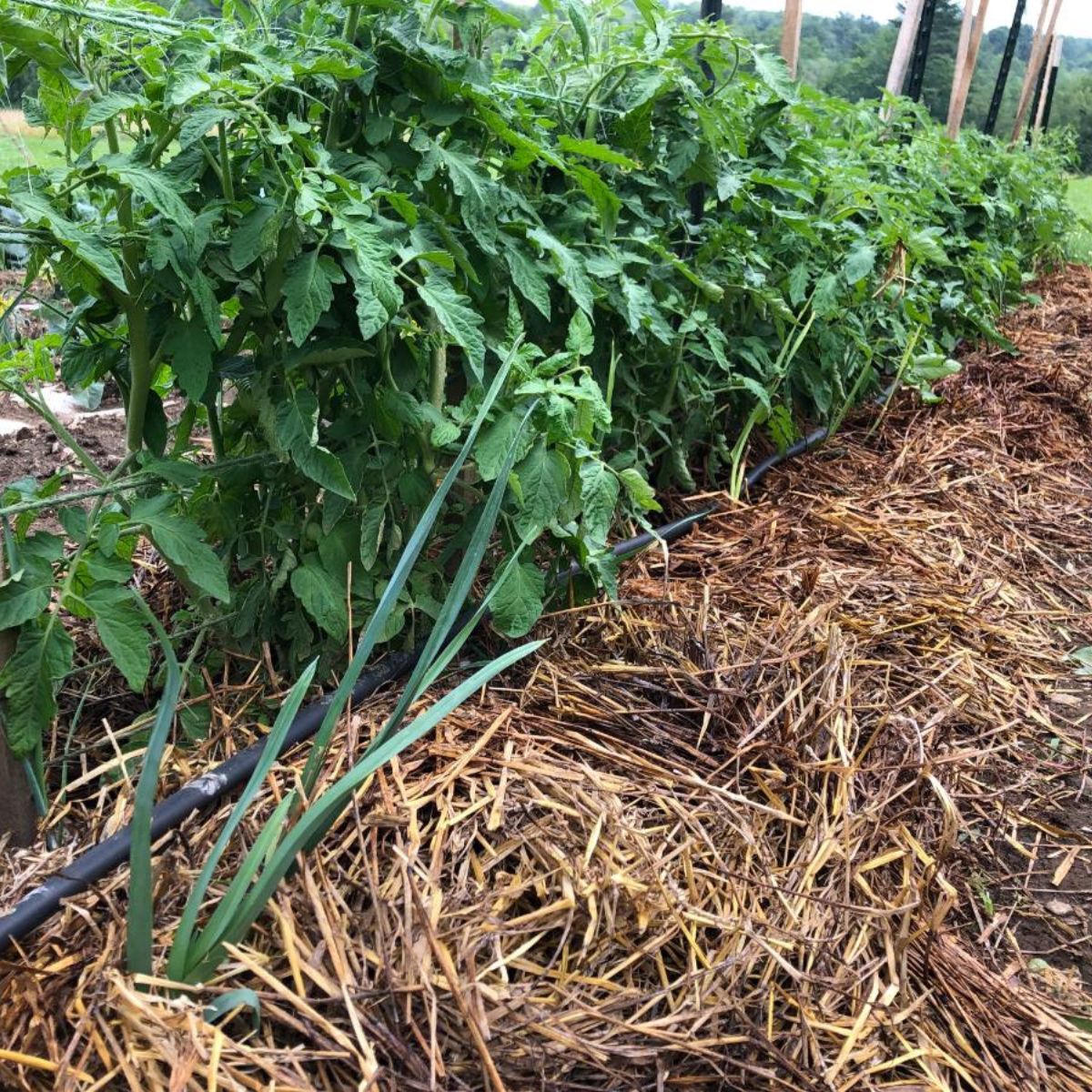
A much better solution is to water at ground level only. Again, that means using a drip irrigation system or a soaker hose system laid out along the base of the tomato plants.
If you do this, you can prevent a lot of the worst tomato diseases, including blight, wilt, and leaf spot diseases, which are all caused by fungi that thrive on plants that stay wet.
Overwatering causes tomato plant diseases, too

Overwatering is also a source of problems for tomatoes.
- Overwatering washes out the nutrients from the ground, starving tomatoes of their essential nutrients.
- Without the right balance of soil nutrients, tomatoes can suffer and things like blossom end rot become a problem.
- Blossom end rot is always thought of as a calcium deficiency, but the fact is that most soils contain adequate calcium as long as it is accessible and not washed away from incessant rains or watering.
- Root rot is also a problem with overwatered tomatoes.
- Cracking in tomatoes can be caused by overwatering, and more specifically by inconsistent watering (for example, no water for a week or two and then you overwater and double the dose of water and the influx causes skins to crack, which can then result in rotting tomatoes).
Underwatering is a tomato disease contributor, too
If you don’t give your tomatoes enough water, that can cause rot and disease issues, too.
- The calcium deficiency that is blamed for blossom end rot is an issue here, too. Tomatoes need water to uptake calcium and other nutrients.
- When they don’t get enough water, the calcium stays in the soil.
- The soil isn’t deficient; the tomato plants just can’t access the calcium because there is not enough water to move it through the plant.
- The same happens with other important nutrients when the plants can’t take them up because there isn’t enough moisture. This weakens tomato plants and undermines their immune systems that rely upon those nutrients.
How often you water matters
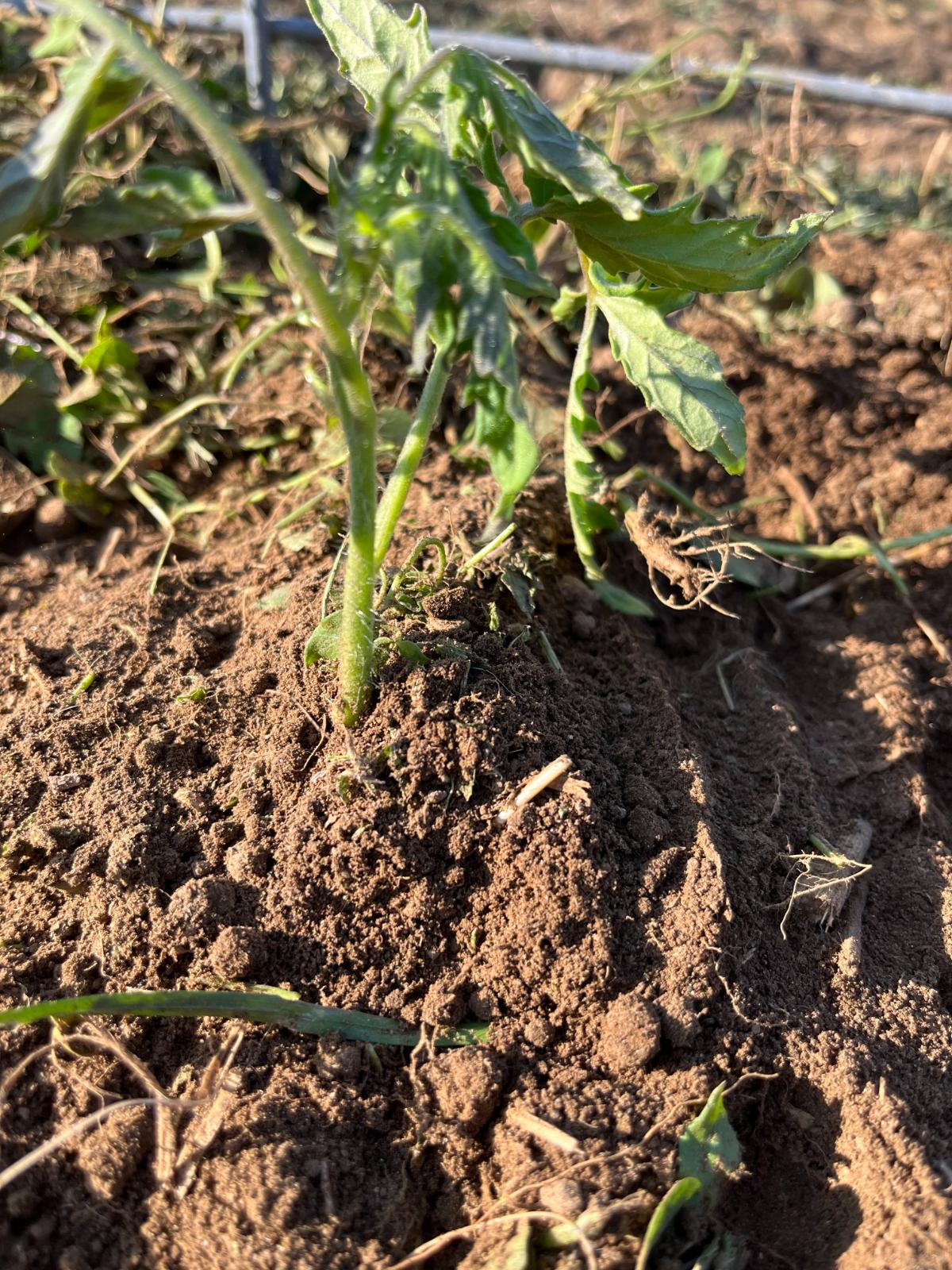
When you first transplant tomatoes into your garden, you should water them every day because their roots are small and don’t reach out very far.
Young transplants will only be able to access water that is in the immediate area, down to about two to four inches (the size and depth of the root ball when you planted).
After the first week, however, you need to start cutting back on the watering frequency. By the time your tomatoes are three or four weeks old, they shouldn’t be watered any more often than two or three times a week.
It is better for older tomatoes to be watered in two or three longer, deeper watering sessions than it is for them to get a little water every day.
Watering no more than two to three times per week means that the tomatoes will reach down into the soil for the water. If you water every day, the roots will remain shallow.
That will make it hard for the plants to access soil moisture and nutrients. It will also result in large tomato plants that are poorly anchored and can become uprooted from the weight of the plant or from harsh weather.
Time watering with rainfall in mind
Keep this in mind when you’re deciding whether to supplement the rainwater your tomatoes get (i.e., if you’re watering or irrigating your tomatoes).
Rain storms count as your watering sessions.
It’s best to time additional watering against natural rainfall so the tomatoes get watered deeply throughout the week.
This might mean that if it rains on Tuesday but there’s an upcoming stretch of four or five days without significant rainfall, the right time to water would be Friday or Saturday.
It might also mean that if you are getting a quarter of an inch on Tuesday and three-quarters of an inch on Saturday, it makes sense to water another ¼ inch on Tuesday, so you get a deep watering.
There’s some judgment and management involved, but the bottom line is that for established plants, fewer waterings are better than daily doses.
Signs You Need to Adjust Your Tomato Watering
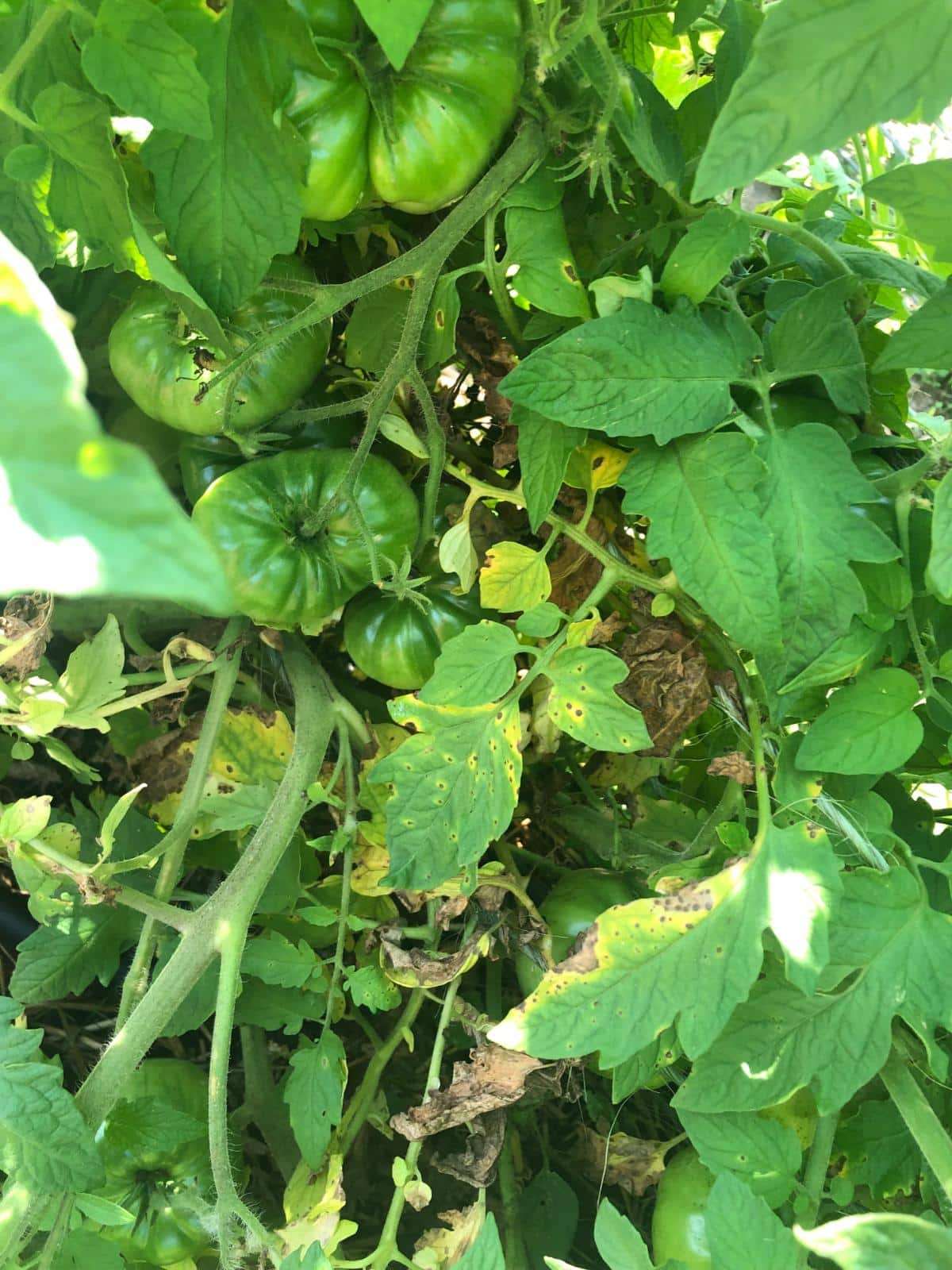
Watering problems are often to blame for the things that go wrong with tomatoes. The following are some signs and symptoms to pay attention to that might indicate that your watering amount or schedule is to blame:
Overwatering:
- Yellowed leaves
- Wilted leaves
- Yellowed stems
- Bumps or blister-like appearances on the plant
- Curling leaves
- Cracked tomatoes
- Soil that doesn’t dry out
- Curling leaves
- Yellowed leaves
- Dry, crispy leaves
- Weak stems
- No blossoms
- Blossoms dropping without forming fruit
- Short plants or stunted growth
- Soil dry on the surface and two to three inches down
- Hard soil
Inconsistent or uneven watering:
- Cracked tomatoes
- Blossom end rot
- Underformed or undersized tomatoes that don’t ripen properly
Clearly, a lot of the symptoms of both over- and underwatering tomatoes can look the same. Key in deciphering the cause is to check the soil – is it dry, moist, or wet when these symptoms are showing?
This is also why it is easiest to use the tips we talked about here. Time, measure, and plan your supplemental watering for your tomato garden.
Then you’ll know quickly and easily if you gave your tomatoes “just enough”.
Other Tips for Watering Tomatoes
To avoid these and other common tomato problems related to watering, follow these tips:
- Water on a regular schedule but with natural rainfalls in mind
- Try to space out watering versus rainfall to two or three waterings per week
- Water at the soil level, never overhead
- Use mulch to preserve soil moisture and help prevent soil splash and disease
- When you see signs of water problems, check the surrounding soil to determine what the problem is
- Remember you can always correct watering problems by increasing or decreasing water; it may take a couple of weeks, but plants should recover
- Use gauges and capturing devices (cans, etc.) so you know how much water is being delivered
- Be flexible enough with your watering not to water if plants don’t need it
- Observe soils to see if they drain too quickly or not enough
- Dig an inch or two down into the soil. If there’s moisture there, your tomatoes have enough water for the time being
- Remember that container-planted tomatoes and raised beds may dry out faster and may need slightly increased or more frequent watering
- If you water containers more frequently, they’ll often need more fertilizing, too, because fertilizers can get washed out of the pot(s)